
Generic vs. Name Brand: When the Difference Is Real
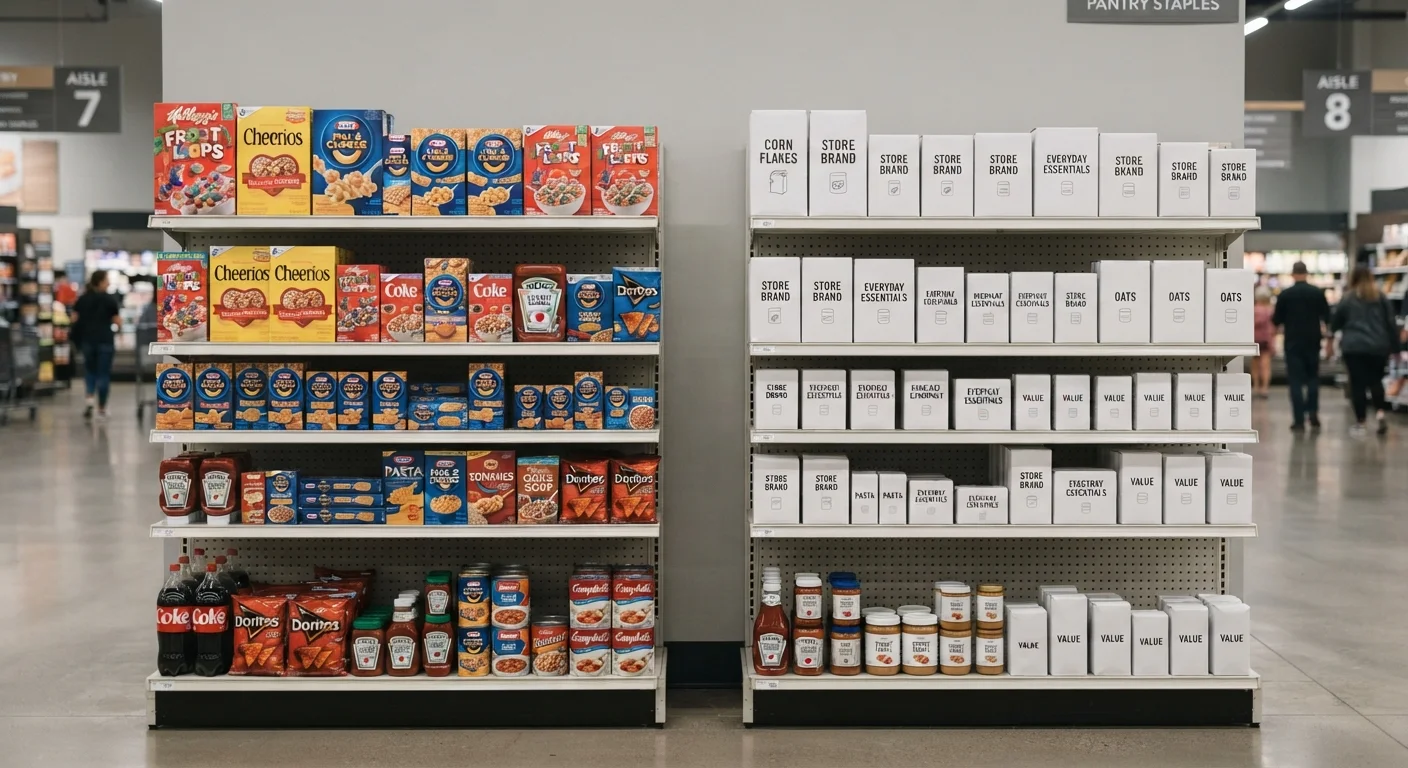
Photo credit: readerspanel.com
In this article
Store brands and name brands sometimes share a factory. Other times they don't. Here's how to tell which comparison actually matters.
Key Takeaways
- In many categories, generics are manufactured by the same facilities that produce name brands.
- The gap between generic and name brand is real in some categories and nearly nonexistent in others.
- Ingredient lists, active ingredient percentages, and published specifications are the most reliable comparison tools.
- Price difference alone is not evidence of a quality difference.
- High-stakes purchases, such as certain medications or safety equipment, warrant closer scrutiny before substituting.
- Reading labels, not packaging, gives you the clearest picture of what you are actually buying.
Why the factory matters more than the label
A significant share of store brand products come off the same production lines as their name brand counterparts. Contract manufacturing is standard practice across food, pharmaceuticals, and personal care. A retailer negotiates with a manufacturer to produce goods under the store's label, often using the same base recipe or formula.
This does not mean every generic is identical to every name brand. Manufacturers sometimes reserve specific formulations, ingredient ratios, or processing steps for their own branded products. The only way to know which situation you are in is to compare what the products actually disclose: ingredient lists, active ingredient percentages, and published specifications.
For over-the-counter medications, the U.S. Food and Drug Administration requires generic drugs to contain the same active ingredient at the same dosage and strength as the name brand equivalent. That regulatory requirement removes most of the meaningful uncertainty in that category. For food and personal care, no such mandate exists, so the comparison requires more attention on your part.
Categories where generic usually holds up
OTC medications: where regulation closes the gap
For over-the-counter medications sold in the United States, the FDA requires that a generic product contain the same active ingredient at the same concentration as the name brand equivalent. This means ibuprofen is ibuprofen regardless of whose label is on the bottle, provided the product is an FDA-approved drug. Check the Drug Facts panel on both products to confirm the active ingredient and dosage match before substituting.
Pantry staples are the clearest case. Flour, sugar, canned tomatoes, and dried pasta follow commodity standards. The generic version is almost always made from the same agricultural inputs. Taste differences, when they appear, are usually a matter of personal preference rather than quality.
Basic cleaning products are similar. The active chemical compounds in bleach, dish soap, and all-purpose spray cleaners are disclosed on the label. Comparing the active ingredient percentages tells you what you need to know. Packaging and scent vary; cleaning performance in equivalent concentrations generally does not.
For food labels specifically, the anatomy of a product description can help you spot when a label is obscuring real differences versus when the wording is just marketing. Ingredient order, weight per serving, and nutritional data are the substance; the front-of-package claims are often not.
Categories where the name brand difference is real
Automotive parts are one area where specifications matter enough to check carefully. Oil filters, brake pads, and air filters carry performance ratings and tolerances. Some store brand versions meet the same standards; others do not. The part number, filtration rating, and compatibility data are what to verify, not the label. For guidance on managing these costs, the car ownership costs hub covers what to watch for.
Specialty adhesives, paints with specific VOC or adhesion ratings, and safety-rated equipment (helmets, harnesses, fire extinguishers) also fall into this category. These products often carry third-party certifications that a store brand may or may not have obtained. Check for the certification mark, not just the price.
Flavor and texture in food can also diverge in ways that matter for specific applications. Baking chocolate, for instance, varies in cocoa solids content. A generic substitute at a different percentage will change the outcome of a recipe. In those cases, the difference is measurable, not imaginary.
How to make the comparison yourself
The most reliable method is label-to-label comparison rather than price-to-price. For food, compare the ingredient list and nutritional panel. For medications, match the active ingredient name and percentage. For cleaning products, look at the active chemical and its concentration. For hardware or automotive parts, find the specification or certification number and verify it independently.
Price gap size is not a signal of quality difference. Anchor pricing affects how we perceive value, and a large markdown from a high reference price can make a product feel superior without any product difference at all.
If a specification sheet is available, use it. The guide to reading specification sheets walks through how to interpret technical data so that the comparison is based on what the product does rather than how it is presented.
For ongoing purchases across categories, building this habit into your shopping routine connects directly to practical budgeting strategies that compound over time without requiring you to sacrifice product performance.

Author
Smart Shopping Editorial Team
Smart Shopping Editorial Team is the collective byline for our editorial team and contributor network. Articles published under this byline or an editorial pen name are researched, written, and reviewed according to our editorial standards for clarity, consistency, and independence before publication.
View all articles →