
Packing Light Without Sacrificing Comfort: A Smarter Approach to What Goes in Your Bag
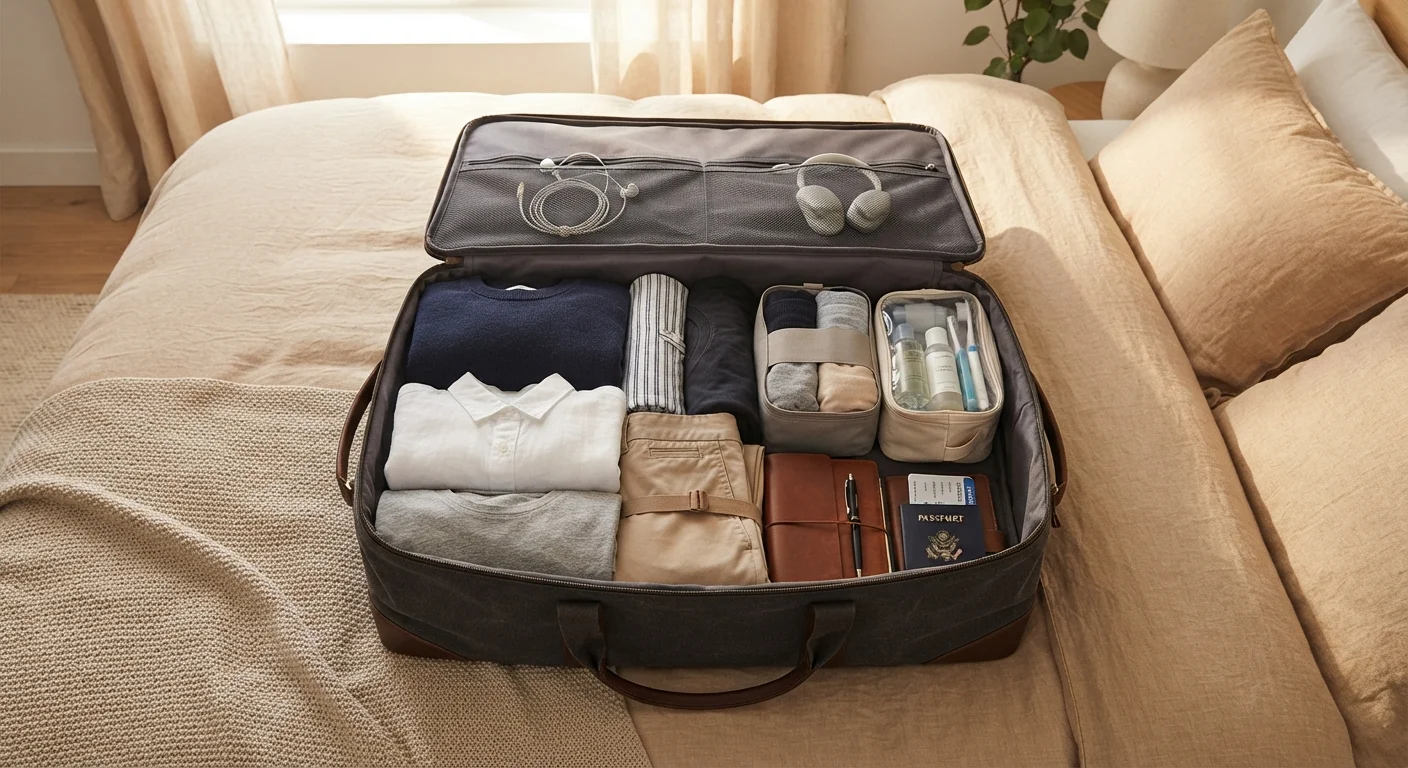
Photo credit: readerspanel.com
In this article
Learn the principles behind efficient packing, from versatile clothing choices to toiletry rules, so you never feel weighed down on the road.
Key Takeaways
- Choosing clothes that work across multiple outfits cuts the total pieces you need by half.
- Decanting toiletries into small reusable containers removes most of the weight from your bag.
- A packing list built around activities, not days, prevents duplication and overpacking.
- Rolling clothes instead of folding them reduces wrinkles and fits more into limited space.
- Carry-on travel forces better decisions and eliminates checked baggage fees and wait times.
Why most travelers overpack
The impulse to overpack is almost universal. People pack for unlikely scenarios, stuff in extras "just in case," and end up hauling a suitcase that weighs more than a car tire. The real cost is not just sore shoulders. It is slower movement through airports, extra fees, and the creeping stress of managing too much stuff in unfamiliar places.
The fix is a shift in how you frame the packing problem. Instead of asking "what might I need?" ask "what will I actually use?" That one change, paired with a few practical techniques, is enough to travel comfortably with far less.
If you are also thinking through your broader trip logistics, our guide on building a travel itinerary that holds covers the scheduling side of the same preparation mindset.
Core practices for packing smarter
The following practices address the most common packing mistakes and give you a repeatable system you can apply to any trip.
Build your clothing list around activities, not calendar days
Packing one outfit per day produces redundancy fast. When you organize around what you will actually do (city walking, a nice dinner, a hike), you see quickly which pieces overlap and which are redundant. This cuts the clothing count without cutting the coverage.
Choose clothes that mix and match across at least three combinations
Neutral-toned, versatile pieces multiply your outfit options without multiplying your bag weight. A top that works with two bottoms doubles its value. This is especially useful for trips longer than five days.
Roll clothes instead of folding them flat
Rolling reduces the surface area clothes occupy and makes wrinkles less likely than flat folding for most fabrics. It also lets you see every item at a glance so you stop repacking to find things.
Decant toiletries into small, reusable containers before you pack
Full-size bottles are heavy and mostly wasted on short trips. Transferring only what you need into travel-size containers cuts toiletry weight significantly, and you avoid the friction of TSA limits on liquids for carry-on bags.
Set a firm bag limit before you start packing, not after
When the bag is open on the bed, the temptation is to fill available space. Deciding in advance that you are using a carry-on sized bag forces tighter decisions earlier in the process, before items accumulate.
Quick actions before your next trip
Families traveling with children will find these principles apply with some adjustments. The planning layer most parents overlook breaks down where family packing lists diverge from solo or couple travel.
And if you want to make sure your overall travel budget accounts for everything that packing decisions affect, including baggage fees and laundry costs on longer trips, see what a travel budget should actually include.

Author
Travel & Adventure Editorial Team
Travel & Adventure Editorial Team is the collective byline for our editorial team and contributor network. Articles published under this byline or an editorial pen name are researched, written, and reviewed according to our editorial standards for clarity, consistency, and independence before publication.
View all articles →