
Traveling with Kids: The Planning Layer Most Parents Don't Account For
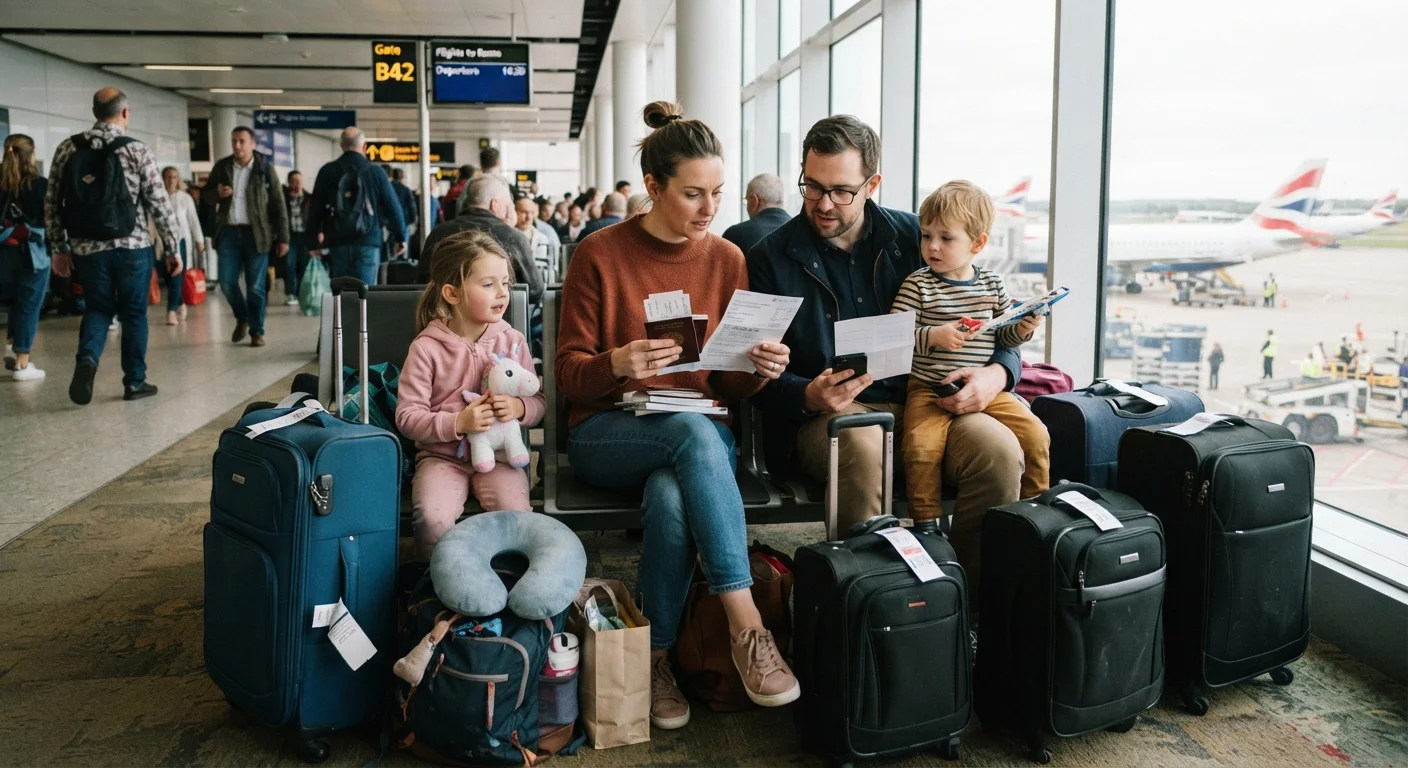
Photo credit: readerspanel.com
In this article
Family trips require a separate planning mindset. Discover the scheduling, safety, and logistics considerations that make or break travel with children.
Key Takeaways
- Children need buffer time built into every itinerary segment, not just between major activities.
- Health documentation, medication access, and emergency contacts require a separate planning checklist.
- Pacing a family trip around kids' energy cycles prevents most meltdowns before they start.
- Budget categories shift significantly when children are traveling, beyond just adding extra seats.
- Flexibility in your booking approach matters more with kids than on any other type of trip.
The planning layer adult-only trips don't need
Planning a trip with kids involves a second complete planning pass that most parents only discover mid-trip, when something goes wrong. The logistics of getting from point A to point B stay the same. What changes is the tolerance for error, the pace that actually works, and the number of contingencies you need to have ready before you leave the driveway.
Family travel and solo travel require fundamentally different preparation. With children, you are not just booking travel for more people; you are building a schedule around shorter attention spans, unpredictable energy levels, and needs that cannot be deferred until a convenient moment.
This guide covers the specific planning layer that makes family trips work: the decisions about pace, safety, logistics, and flexibility that sit underneath the standard itinerary.
What you will need
Why standard itinerary-building breaks down with kids
Most adults plan trips by listing what they want to see and roughly how long each thing takes. That method assumes the traveler can push through discomfort, skip lunch if the timing is awkward, and handle a 45-minute delay without a crisis. Children cannot reliably do any of those things.
Overpacking a schedule is already the most common adult trip-planning mistake. With kids in the picture, the margin for error shrinks further. A toddler who missed a nap at noon will not be charmed by a museum at 3 p.m. A seven-year-old who has walked three miles in sandals will not care about the dinner reservation you made three months ago.
The fix is not to plan less; it is to plan differently. Build the schedule around energy cycles, not attraction hours. Leave two transition buffers for every one you think you need. Identify the one or two non-negotiable experiences per day, then treat everything else as optional. That approach is covered in detail in the flexible vs. fully booked planning comparison, and it applies even more directly when children are along.
The two-activity rule works
Families who cap themselves at two main activities per day tend to report more enjoyment and fewer conflict points than those who build dense schedules. The activities themselves matter less than having enough unstructured time between them for children to decompress. A slow morning coffee while kids play on a hotel lawn is not wasted travel time.
The health and safety checklist most parents build too late
Beyond the standard itinerary, family travel requires a parallel safety and health planning pass. This means gathering health documentation, identifying medical facilities near your destination, and preparing a physical medication kit before departure, not the night before or at the pharmacy in the terminal.
Carry copies of each child's insurance card, vaccination records, and a list of any current medications including dosage and prescriber information. If you are traveling internationally, verify well in advance what entry health requirements apply to children. Official government travel websites and your child's pediatrician are the right sources for this; do not rely on travel forums for requirements that carry legal or health consequences. Always verify current entry requirements with official sources before your trip, as rules change.
Identify the nearest urgent care or pediatric clinic to every accommodation you book. Write this information down in a format that does not require phone signal. A printed card in your travel wallet takes two minutes to prepare and removes a full minute of panic from any scenario that requires it.
Budget categories that shift when kids come along
A family travel budget is not simply a larger version of an adult travel budget. Several expense categories change shape entirely. A complete travel budget already covers more categories than most travelers expect, and children add another set on top.
Food costs tend to run higher per day than projected, because children eat on their own schedule and rarely want to wait for a cheap local option. Snack budgets, familiar backup foods for picky eaters, and the occasional emergency meal at an airport price all add up. Factor in activity costs at child admission rates, which are sometimes lower and sometimes comparable to adult pricing depending on the destination. Stroller or car seat rental fees, if you plan to travel without your own equipment, vary widely by location and should be confirmed before arrival. A separate contingency line for disrupted bookings matters more on a family trip than on most others, because the probability of needing to adjust a reservation due to illness or exhaustion is genuinely higher.
Step-by-step: building the family planning layer
The steps below are designed to run alongside your standard trip-planning process, not replace it. Work through the full trip planning process first, then apply this family-specific layer on top.
Map each day around energy, not attractions
Before adding any specific activities, sketch each day in three blocks: morning (highest energy), midday (rest or low-demand activity), and afternoon or evening (moderate energy). Place your most demanding or longest activities in the morning block. Reserve midday for a meal, a rest period, or something low-pressure like a pool or a park. Do not schedule anything critical in the window just before or after a young child's usual nap or sleep time.
Build a dedicated health and safety document
Create a single document, physical and digital, that includes: each child's full name, date of birth, and blood type if known; insurance policy numbers and the insurer's international or emergency line; current medications with dosage; known allergies; your pediatrician's contact information; and the address and phone number of a medical facility near each accommodation. Share a copy with any other adult traveling with you.
Pre-research child-specific logistics at your destination
Confirm in advance: whether your accommodations have cribs, rollaway beds, or adjoining rooms available (and whether these require a request or an additional fee); whether transportation options at the destination accommodate strollers or car seats; whether the activities on your shortlist have age or height restrictions that would affect any child in your group; and whether restaurants in your target area have high chairs or early-seating options.
Set a realistic daily activity count
Two substantial activities per day is a workable ceiling for most families with children under ten. Three is possible if one of them is low-demand (a beach, a playground, a casual market walk). More than three tends to produce diminishing returns: children are overtired, parents are fraying, and nobody enjoys the fourth thing. Build your shortlist at double the activities you plan to actually do, so that when a child needs an unplanned rest hour, you have a ranked backup ready.
Prepare your packing list as a separate family document
Start with your standard adult packing list. Add a children's column covering: comfort or sleep items; prescription or over-the-counter medications appropriate for your destination and pre-approved by your pediatrician; snacks for transit; at least one change of clothes per child in carry-on or daypack; physical entertainment (small books, activity pads, simple games) that does not rely on power; and any destination-specific items such as sun protection, insect repellent, or cold-weather layers. Review the list against your itinerary and cut anything that does not serve at least two purposes.
Packing with children in mind
Packing for a family trip is its own planning task. The principles of packing light without sacrificing comfort still apply, but children add categories that cannot be cut: comfort items, specific medications, a change of clothes accessible mid-journey rather than buried in checked luggage, and entertainment for transit that does not depend on a charged device or Wi-Fi signal.
One practical rule: pack one more day of children's clothing than the trip requires, and keep one outfit per child in your carry-on regardless of how you are traveling. Spills, illness, and unexpected overnight delays do not wait for luggage to arrive. Assign each older child a small backpack with their own water, a snack, and one activity. It reduces what parents carry and gives children a concrete sense of participation in the trip.

Author
Travel & Adventure Editorial Team
Travel & Adventure Editorial Team is the collective byline for our editorial team and contributor network. Articles published under this byline or an editorial pen name are researched, written, and reviewed according to our editorial standards for clarity, consistency, and independence before publication.
View all articles →