
Traveling Solo vs. Traveling with Others: Planning Differences Worth Knowing
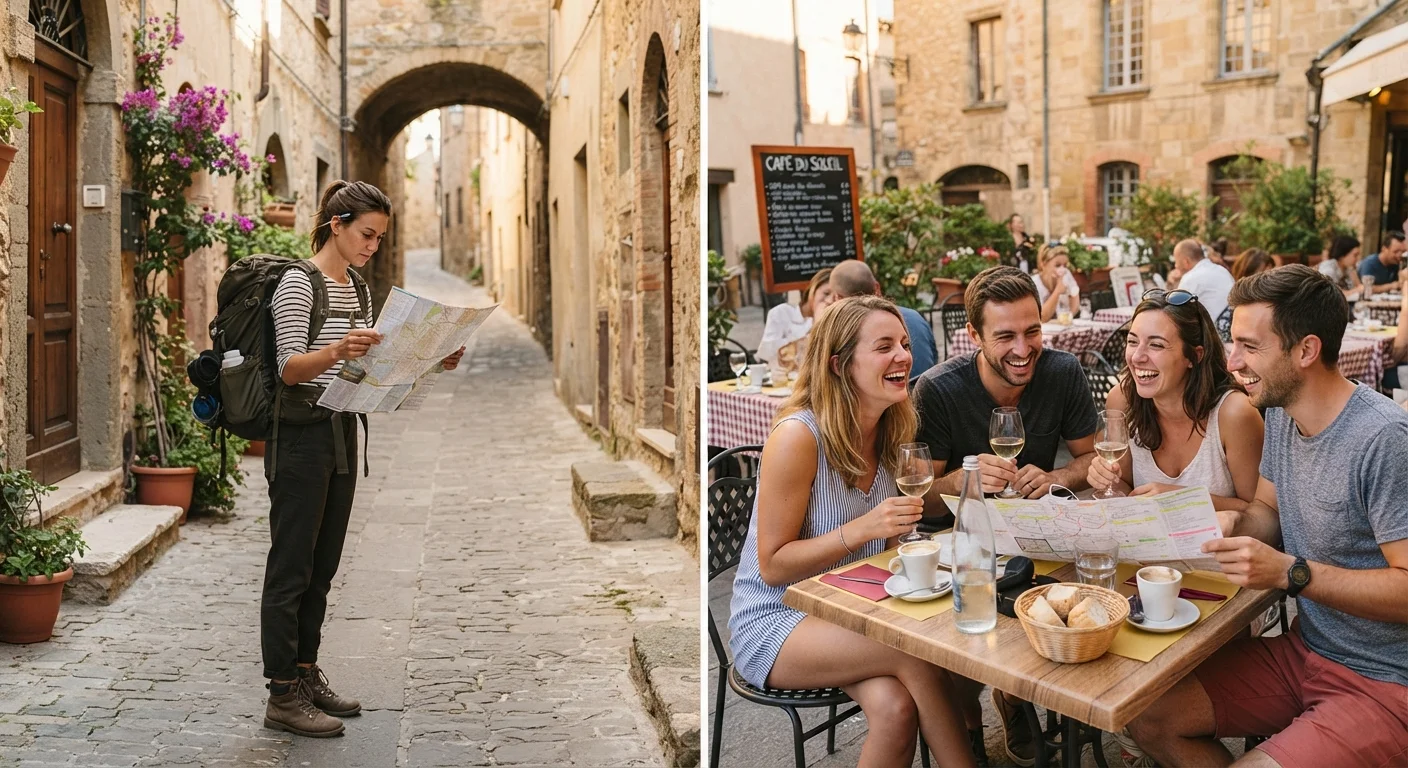
Photo credit: readerspanel.com
In this article
Solo travel and group travel require very different preparation strategies. Here's how the planning process shifts depending on who's coming along.
Key Takeaways
- Solo travel puts every planning decision on one person, which is both a freedom and a burden.
- Group travel requires alignment on budget, pace, and priorities before booking anything.
- Accommodation choices shift significantly depending on whether you are traveling alone or with others.
- Safety planning is more self-reliant in solo travel and needs to be deliberate, not assumed.
- Flexible itineraries tend to work better for solo travelers; group trips often benefit from more structure.
How the planning burden is distributed
Solo travel concentrates every decision in one place. You pick the destination, set the dates, choose the accommodation, and handle every contingency plan. That concentration is genuinely freeing when it works well, and genuinely exhausting when you are also managing a full-time job and a two-week international itinerary.
Group travel distributes that load, but distribution is not the same as relief. Coordinating schedules across four people, each with different vacation windows and spending limits, often takes more pre-trip effort than planning a solo trip from scratch. The coordination phase is where group trips most often stall or fall apart before anyone buys a flight.
A practical way to handle group planning is to designate one person as the logistics lead for each major category: one person owns flights, one owns accommodation, one owns activity research. This prevents the situation where everyone assumes someone else handled the hotel.
Budget: individual control vs. shared complexity
| Criterion | Solo travel | Group travel |
|---|---|---|
| Decision-making | One person decides everything | Requires group consensus |
| Budget control | Fully individual | Shared costs, but harder to align |
| Accommodation options | Hostels, guesthouses work well | Multi-room or vacation rentals common |
| Itinerary flexibility | Easily adjusted at any time | Changes need group agreement |
| Safety planning | Fully self-managed | Shared responsibility |
| Booking complexity | Simpler, fewer variables | Coordination across schedules and preferences |
Solo travelers carry the full cost of every room, every meal, and every transport leg. There is no one to split a rental car or a vacation home with, which makes per-night accommodation costs noticeably higher. Hostels and guesthouses with private or shared rooms can offset this, and many solo travelers build itineraries around that option deliberately.
Group travel can reduce per-person costs on accommodation and ground transport, but only when the group agrees on a spending level upfront. A traveler comfortable spending $80 a night on a room and one comfortable spending $200 will create friction at every booking. That conversation needs to happen before anyone searches for hotels. For more on how trip format affects your overall budget, see how road trips and fly-in vacations compare financially.
Itinerary structure and flexibility
Solo travelers can treat an itinerary as a loose suggestion. Waking up in Lisbon and deciding to spend a third day there instead of catching a train to Porto is a minor schedule change that affects no one else. That ease of adjustment makes day-by-day planning feel lower-stakes.
Group itineraries need more structure, partly because flights and multi-room accommodation usually cannot be changed cheaply at the last minute, and partly because leaving things loose tends to produce the paralysis of too many opinions and no decision. A skeleton itinerary with anchor bookings (arrival transfers, at least the first two nights of accommodation) and open blocks for group-decided activities generally works better than either a fully scripted schedule or a blank calendar. Comparing flexible and fully booked itineraries covers that tradeoff in more detail.
Safety planning differences
Verifying entry and safety information
Regardless of whether you travel solo or with a group, entry requirements, visa rules, and travel advisories can change. Always verify current conditions with the U.S. Department of State's travel website and your destination country's official immigration authority before you book or depart.
Solo travelers carry all safety planning themselves. That means sharing your itinerary and accommodation details with someone at home, keeping digital and physical copies of important documents in separate places, and having a clear plan for what to do if something goes wrong, whether that is a medical issue, a theft, or a missed connection.
Group travelers share that safety net by default: someone else knows where you are, and there is immediate help if one person gets sick or injured. The risk is assuming that shared presence is the same as shared preparation. Groups still need a plan for medical emergencies, a clear understanding of local emergency numbers, and agreement on travel insurance coverage before departure. Common misconceptions about solo travel safety walks through what first-timers often get wrong about the risks involved.
Accommodation choices by travel style
Solo travelers have more accommodation options at the budget end of the market. Hostels with private or shared rooms, guesthouses, and short-term rentals sized for one are widely available in most destinations. The social environment of a hostel common room can also reduce the isolation that some solo travelers find challenging, particularly on longer trips.
Groups traveling with two or more people generally find that sharing a vacation rental or multi-room suite becomes cost-competitive with booking separate hotel rooms. The logistical benefit is also real: one shared kitchen and living area reduces the daily negotiation of where to meet and when. The tradeoff is that one rental requires everyone to arrive and leave on the same schedule, which eliminates the flexibility some group members might want at the start or end of a trip.
If your group includes children, the accommodation and pacing questions become more specific. Planning a trip with kids covers the layer of logistics most parents do not account for until they are already at the airport.

Author
Travel & Adventure Editorial Team
Travel & Adventure Editorial Team is the collective byline for our editorial team and contributor network. Articles published under this byline or an editorial pen name are researched, written, and reviewed according to our editorial standards for clarity, consistency, and independence before publication.
View all articles →