
What Uneven Tire Wear Is Actually Telling You About Your Car
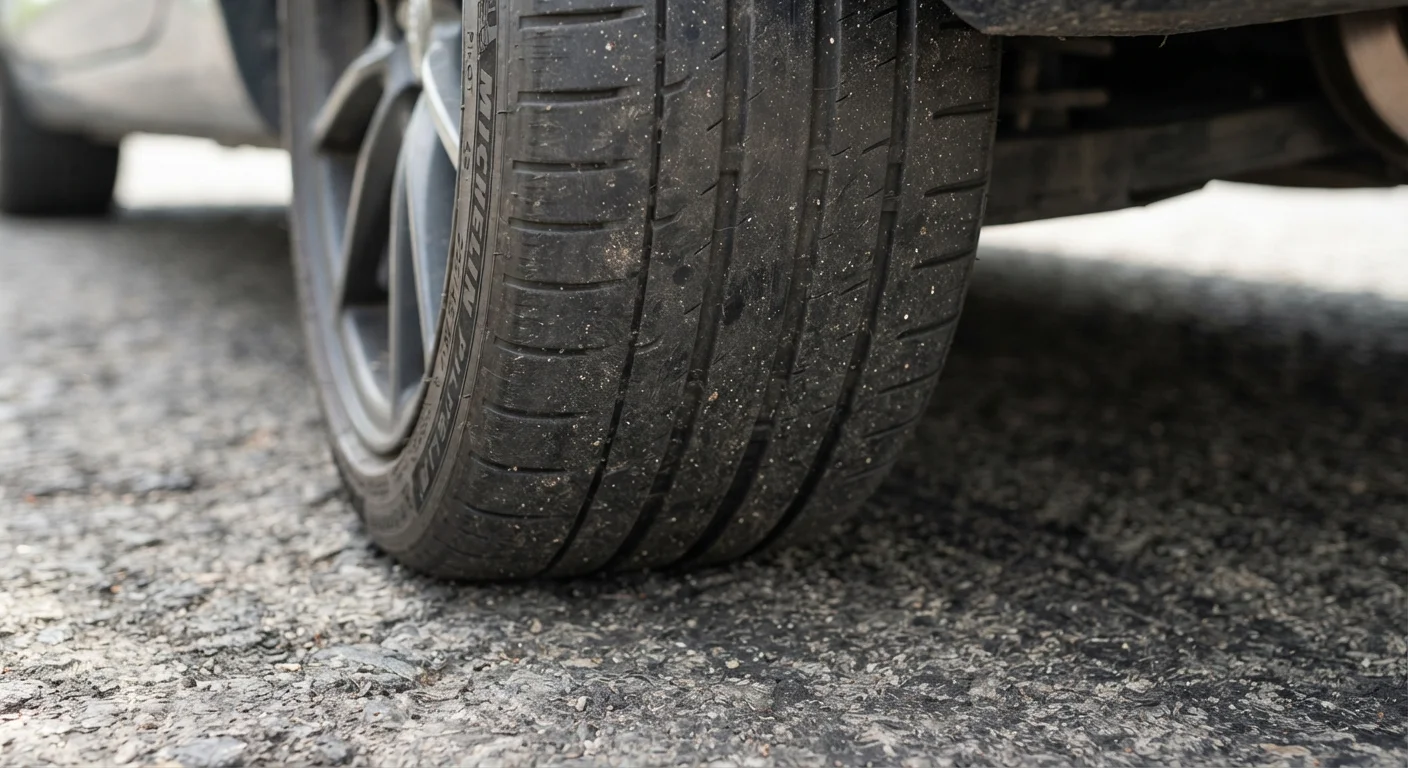
Photo credit: readerspanel.com
In this article
Bald edges, center wear, cupping, and feathering each point to different problems. Learn how to read your tires before small issues become costly ones.
Key Takeaways
- Wear on both outer edges usually means the tire has been consistently underinflated.
- Center-only wear typically means the tire has been overinflated.
- Cupping or scalloping across the tread points to worn shocks or struts.
- Feathering along one side signals a wheel alignment or toe angle problem.
- One-sided wear on the inner or outer edge often means the camber angle is off.
- Catching the pattern early can prevent the problem from damaging other components.
How to read tire wear patterns
Run your palm across the full width of each tire tread. You are feeling for smooth patches, raised ridges, or dips that do not match the rest of the tread. What you find, and where you find it, is a direct read on what the tire has been experiencing. The three separate jobs of rotation, balancing, and alignment each affect where and how wear accumulates, so understanding the pattern helps you identify which service is actually needed.
There are five main wear patterns worth knowing: edge wear, center wear, one-sided wear, cupping, and feathering. Each has a distinct cause.
Edge wear and center wear: the inflation story
When both outer edges of a tire wear faster than the center, the tire has been running underinflated. Low pressure causes the tire to flatten slightly under load, which puts more contact on the outer shoulders than the center. The fix is straightforward: inflate to the pressure listed on the sticker inside the driver's door jamb, not the maximum figure molded into the tire sidewall. That door-jamb number is the vehicle manufacturer's specification for your specific load and handling setup.
The opposite pattern, a worn strip down the center with relatively fresh-looking edges, means the tire has been overinflated. Too much air causes the tread to crown upward, so only the center contacts the road squarely. Both patterns accelerate tread life loss and reduce the grip available in emergency situations, which matters especially on wet roads and low-traction surfaces.
Check pressure when tires are cold
Tire pressure rises as the rubber heats up during driving, sometimes by 4 to 6 PSI. Always check inflation after the car has been parked for at least three hours for an accurate reading. Use the pressure listed on the door jamb sticker, not the number on the tire sidewall.
One-sided wear: a camber or alignment problem
If one tire is significantly more worn on its inner edge than its outer edge, or vice versa, the likely cause is a camber angle that is out of specification. Camber is the vertical tilt of the wheel when viewed from the front of the car. A wheel that tilts inward at the top (negative camber) puts extra load on the inner edge. A wheel that tilts outward (positive camber) does the same on the outer edge.
Camber can drift out of specification after hitting a pothole, curb, or other road hazard. It can also change as suspension bushings wear out over time. A wheel alignment service measures and corrects camber, along with toe and caster angles. If a mechanic finds camber that cannot be brought back within spec through alignment alone, worn or bent suspension components may be the underlying issue.
Cupping and feathering: suspension and alignment signals
Cupping, also called scalloping, looks like a series of shallow dips or high spots repeating around the tire's circumference. The tread appears wavy rather than flat. This pattern almost always points to worn or failing shock absorbers or struts. A shock that cannot properly dampen wheel bounce allows the tire to repeatedly lift slightly off the road and strike back down, wearing the tread unevenly at each contact point. Cupped tires often produce a noticeable rumbling or thumping noise at highway speeds.
Feathering is a pattern where tread blocks are smooth on one side and sharp on the other, giving the tread a saw-tooth profile when you run your hand across it. It is a toe alignment problem. The wheel is pointed slightly inward or outward relative to the direction of travel, causing it to scrub sideways as it rolls. An alignment correction addresses this, and catching it early prevents the wear from progressing to the point where the tire needs replacement.
Both cupping and feathering are worth addressing promptly, since worn shocks affect vehicle stability and a misaligned wheel puts stress on other steering and suspension components. The cost of preventive maintenance is generally far lower than replacing suspension parts that have been operating under abnormal loads for months.
What to do when you find a problem
Start with tire pressure: check all four tires when the vehicle has been parked for at least three hours, since warm tires read higher. If pressure is correct and you still see edge or center wear, the pattern may reflect past inflation habits rather than a current problem, but keep monitoring.
For cupping, one-sided wear, or feathering, have a qualified mechanic inspect the suspension and alignment. These are not DIY-friendly checks without specialized equipment. A mechanic can measure angles precisely and identify worn bushings, ball joints, or shocks that a visual inspection might miss. Catching those issues early also protects your brakes; suspension problems that alter wheel geometry can cause uneven brake rotor contact, a topic worth reviewing alongside brake wear warning signs.
If a tire has already worn unevenly to the point where tread depth varies significantly across its width, replacement is likely necessary even after fixing the root cause. A tire technician can measure tread depth at multiple points and advise on whether the tire is still within a safe range.
Frequently Asked Questions

Author
Automotive Life Editorial Team
Automotive Life Editorial Team is the collective byline for our editorial team and contributor network. Articles published under this byline or an editorial pen name are researched, written, and reviewed according to our editorial standards for clarity, consistency, and independence before publication.
View all articles →