
Tire Rotation, Balancing, and Alignment: Three Jobs That Are Easy to Confuse
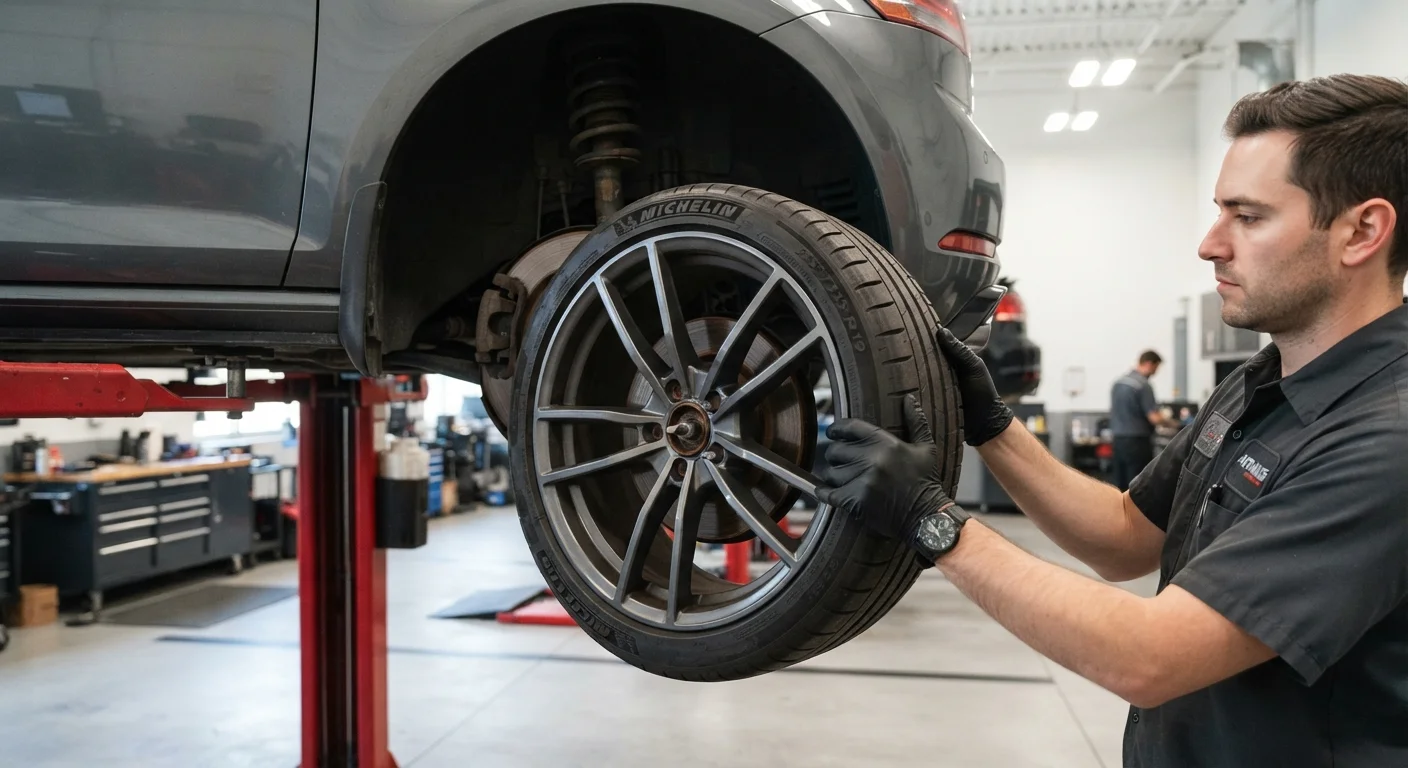
Photo credit: readerspanel.com
In this article
Rotation, balancing, and alignment each serve a different purpose. Understand what each one does and when your car needs it.
Key Takeaways
- Rotation, balancing, and alignment each fix a different problem and cannot substitute for one another.
- Most manufacturers recommend tire rotation every 5,000 to 7,500 miles, often timed with oil changes.
- Wheel balancing corrects vibration caused by uneven weight distribution in the wheel-and-tire assembly.
- Alignment adjusts wheel angles and is needed after a hard impact, suspension work, or when the car pulls to one side.
- Skipping any of these services accelerates tread wear and can affect handling and fuel economy.
What tire rotation actually does
Each tire on your car wears at a different rate depending on where it sits. Front tires on a front-wheel-drive vehicle carry the engine weight, handle steering, and transmit power to the road simultaneously. They wear faster than the rear tires, and they wear in a specific pattern shaped by those combined demands.
Rotation moves each tire to a different position, spreading that uneven stress across the full set. The result is that all four tires reach the end of their useful life at roughly the same time rather than two wearing out while the other two are still nearly new. Replacing all four at once is typically cheaper per tire and produces more consistent handling than mixing old and new rubber.
Most manufacturers specify a rotation interval in the owner's manual, commonly every 5,000 to 7,500 miles. Timing it with an oil change is a practical habit that keeps the interval consistent. Your drivetrain layout affects which rotation pattern applies, so a front-wheel-drive car and an all-wheel-drive car may follow different sequences.
What wheel balancing corrects
A wheel and tire assembly is not perfectly uniform in weight around its circumference. Small manufacturing variations, the placement of the valve stem, and normal wear all create minor imbalances. When one section of the assembly is heavier than the opposite side, it creates a wobble at speed.
A balancing machine spins the wheel-and-tire assembly and measures where the weight is off. A technician then attaches small counterweights to the rim to even the distribution. When done correctly, the vibration disappears and the tire makes full, even contact with the road throughout each rotation.
Schedule balancing with new tire installations
Any time new tires are mounted, balancing should be part of the same service. New tires are not perfectly uniform from the factory, and mounting them without balancing can introduce vibration immediately. Ask your shop to confirm balancing is included before the work begins.
Balancing is standard when new tires are mounted and is worth requesting any time you feel steering wheel vibration that worsens at highway speeds. It is a separate procedure from rotation, though some shops perform both at the same visit.
What alignment fixes and when it matters
Alignment is about geometry. The wheels on your car are set at specific angles, including camber (the tilt inward or outward when viewed from the front), toe (how much the tires point toward or away from each other when viewed from above), and caster (the angle of the steering axis). These angles are calibrated at the factory to match the vehicle's suspension design.
Hard impacts with potholes, curbs, or road debris shift those angles out of spec. So does worn suspension hardware. When alignment is off, the tires roll at a slight angle instead of straight ahead, which scrubs off tread unevenly and can make the car pull to one side. Certain tread wear patterns are direct evidence of an alignment problem.
An alignment check uses a four-wheel alignment rack to measure each angle and compare it to the manufacturer's specification. Adjustments bring the angles back within tolerance. This is not a task drivers can perform at home; it requires dedicated shop equipment.
There is no fixed mileage interval for alignment the way there is for rotation, but checking it annually or after any significant impact is a reasonable practice. Staying current with alignment and other routine services can prevent much costlier repairs later.
How the three services work together
None of these three services substitutes for another. A balanced tire on a misaligned car will still wear unevenly. A well-aligned car with unrotated tires will still lose tread faster on the front axle. Rotation without balancing leaves a vibration problem in place.
Tires are also more sensitive to pressure than many drivers realize. Running tires at the wrong pressure compounds wear problems that rotation and alignment are trying to prevent. Treating these as a connected system rather than isolated tasks is the most cost-effective way to get the full mileage out of a set of tires. Several of these checks fit into a broader routine you can maintain between scheduled shop visits.
Frequently Asked Questions

Author
Automotive Life Editorial Team
Automotive Life Editorial Team is the collective byline for our editorial team and contributor network. Articles published under this byline or an editorial pen name are researched, written, and reviewed according to our editorial standards for clarity, consistency, and independence before publication.
View all articles →