
Cover Crops: The Off-Season Strategy That Improves Your Soil While You Rest
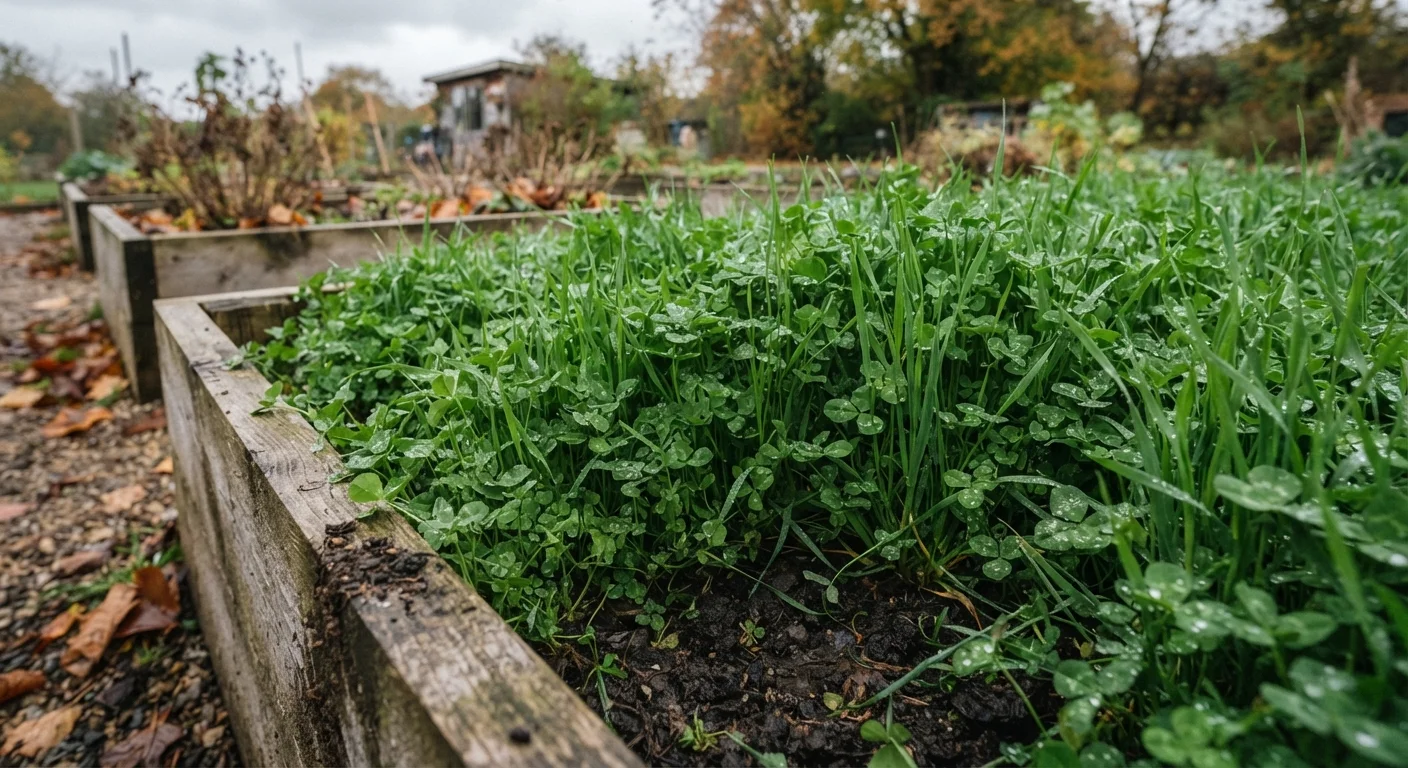
Photo credit: readerspanel.com
In this article
Cover crops protect bare soil, fix nitrogen, and break up compaction over winter. Find out which types suit common home garden situations.
Key Takeaways
- Cover crops prevent erosion and weed germination on bare soil over winter.
- Legume species can fix nitrogen, reducing how much fertilizer you need in spring.
- Deep-rooted species like daikon radish break up compacted subsoil without digging.
- Most cover crops are killed by hard frost or terminated before spring planting, then worked in as green manure.
- Timing your cover crop seeding matters: most species need four to six weeks of growth before frost to establish.
What happens to bare soil over winter
Leaving garden beds empty after the last harvest looks tidy, but bare soil loses structure quickly. Rain compacts the surface, wind carries away the lightest particles, and without roots holding the soil matrix together, the organic matter built up over the growing season can erode or oxidize. Weed seeds fill the gap, germinating in any mild stretch before spring.
Cover crops address all of these problems at once. A dense stand of winter rye, for instance, forms a living mulch that protects the soil surface, keeps weed seeds shaded out, and pushes roots several inches into the profile, loosening compaction. When the crop is terminated in spring and worked in, it adds organic matter that soil microbes break down into nutrients for your vegetables. This approach pairs well with the other fall tasks described in our fall garden prep guide.
Choosing the right cover crop for your situation
The right species depends on what your soil needs, how cold your winters get, and what you plan to grow in spring.
Legumes for nitrogen
Hairy vetch, crimson clover, and field peas all form root nodules that capture nitrogen from the air. After termination, that nitrogen releases into the soil as the roots and leaves decompose. A well-established stand of hairy vetch can contribute a meaningful amount of nitrogen, though the exact quantity depends on biomass, soil conditions, and how long it grows. These species work well before heavy-feeding crops like corn, tomatoes, or squash.
Grasses for structure and organic matter
Winter rye and oats are cold-tolerant grasses that produce substantial root mass. Their roots create channels in the soil that improve drainage and aeration. Oats winterkill in most of the northern US, which makes spring termination simpler because you just till in the dead matter. Winter rye survives hard frost and must be cut or tilled before it gets too tall in spring.
Brassica types for compaction
Daikon radish, sometimes sold as tillage radish, sends a taproot several inches into compacted subsoil. As the root decomposes over winter, it leaves a channel that improves water infiltration. Because daikon winterkills below about 25 degrees F, it rarely requires manual termination in colder climates.
Try a simple two-species mix
Mixing winter rye and crimson clover when broadcasting seed gives you both structural root mass and nitrogen fixation in one planting. Seed the mix at the rate recommended on the package for each component, reduced slightly to account for sharing space. This approach is forgiving for first-time cover croppers.
Mixing species, such as seeding winter rye and crimson clover together, gives you both structural benefit and nitrogen fixation. Broadcasting a simple two-species blend is straightforward and the seed is widely available at farm supply stores.
Seeding and termination basics
Broadcast seed evenly over the bed after clearing spent plants and raking the surface lightly. Rake again after seeding to press seed into contact with the soil. Most cover crop seeds do not need deep burial; one-quarter to one-half inch of soil contact is usually enough.
Termination timing matters because a cover crop that sets seed before you remove it can become a weed problem. Cut or till the crop while it is still in the vegetative stage, before flowering, and certainly before seed heads form. Incorporate the material into the top few inches of soil and wait two to three weeks before direct seeding or transplanting. That waiting period lets decomposition microbes do their work without competing with your seedlings for available nitrogen. If you are starting seeds indoors during this window, the seed starting guide covers timing and light management to get transplants ready while the bed finishes settling.
For gardeners who also use compost, cover crops and compost work together well. The organic matter from both sources feeds the same soil microbial community. See our composting overview for guidance on building and using finished compost alongside a cover crop rotation.
4-6 weeks
Minimum establishment time before first frost
Most cooperative extension guidelines recommend seeding cover crops at least four to six weeks before the expected frost date to ensure adequate root development.
~25°F
Temperature at which daikon radish winterkills
Daikon radish typically winterkills when temperatures drop below approximately 25 degrees F, eliminating the need for manual termination in most northern US gardens.
50-200 lbs/acre
Nitrogen fixation range for legume cover crops
University extension research estimates that legume cover crops can fix between 50 and 200 pounds of nitrogen per acre depending on species, stand density, and growing conditions.
Frequently Asked Questions

Author
Home & Garden Editorial Team
Home & Garden Editorial Team is the collective byline for our editorial team and contributor network. Articles published under this byline or an editorial pen name are researched, written, and reviewed according to our editorial standards for clarity, consistency, and independence before publication.
View all articles →