
Styling a Bookshelf: Organizing Books and Objects So the Result Looks Considered, Not Cluttered
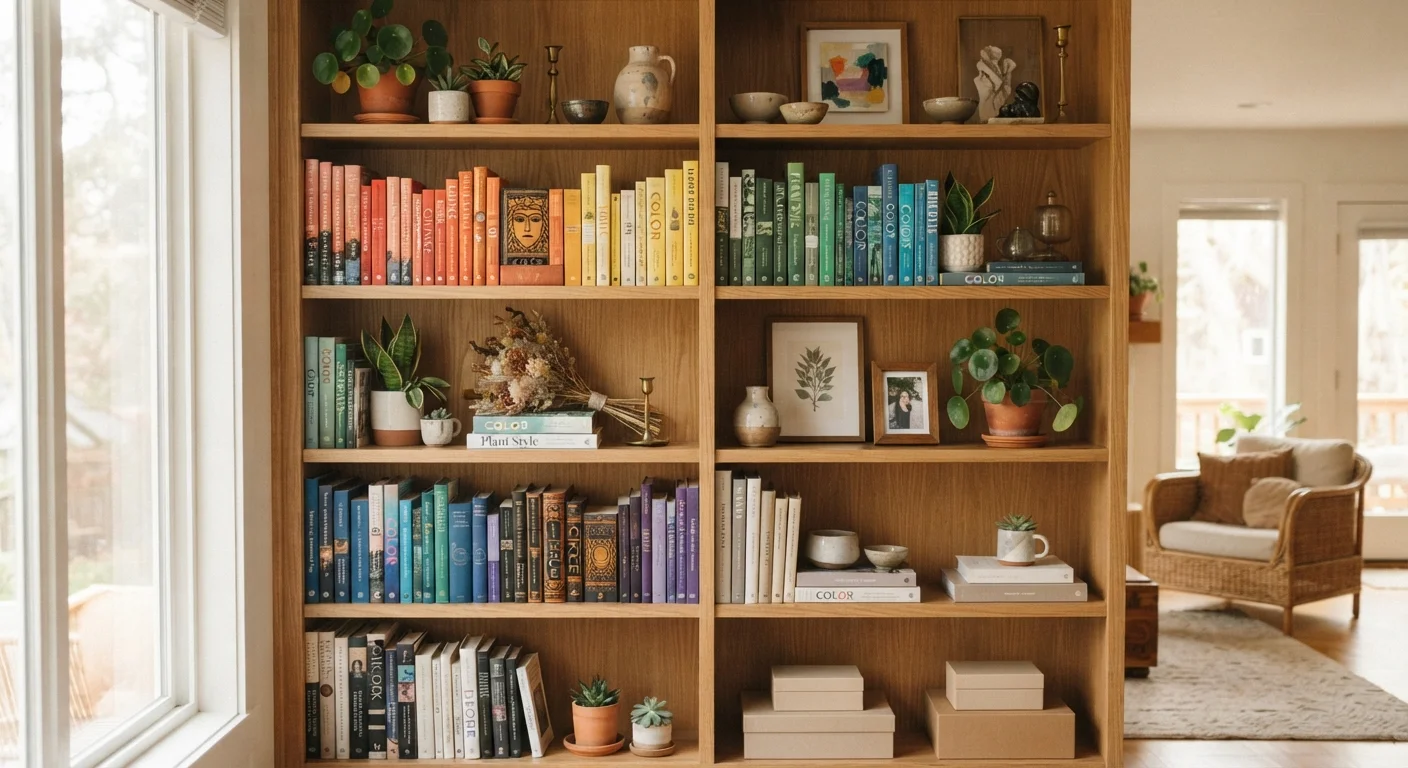
Photo credit: readerspanel.com
In this article
A well-styled bookshelf balances books, objects, and negative space. Learn the arrangement principles that make shelves look curated rather than chaotic.
Key Takeaways
- Edit ruthlessly before you arrange: remove anything that does not belong on the shelf.
- Vary object height and depth on each shelf to create visual rhythm without chaos.
- Negative space is not wasted space; gaps between groups give the eye somewhere to rest.
- Limit your decorative objects to two or three per shelf section to avoid crowding.
- Color grouping books by spine color is one of the fastest ways to unify a busy shelf.
Why bookshelves are hard to get right
A bookshelf holds more categories of object than almost any other surface in a home: books of different sizes and spine colors, plants, art, collected objects, and practical storage all compete for space. The result, when unstyled, is visual noise rather than composition.
The principles that make a shelf look considered are the same ones that govern other display decisions in a room. Gallery wall arrangement, for instance, relies on the same balance between grouping and breathing room that a bookshelf does. The difference is that a shelf has depth, multiple horizontal levels, and functional constraints that a flat wall does not.
Getting the result right does not require buying new objects or matching a specific aesthetic. It requires editing what you already own, applying a few consistent arrangement principles, and being willing to leave some space empty. The steps below walk through the full process.
What you will need
Arrangement principles that hold across styles
Before working through the steps, two ideas are worth understanding because they apply to every decision you make on the shelf.
Vary height and depth, not just color
A shelf where everything sits at roughly the same height looks flat. Variation in height, achieved through stacked books, taller objects, or items placed on small risers, creates the rhythm that makes a shelf interesting. Depth variation, pulling some items forward to the shelf edge while leaving others set back, adds dimension that a flat arrangement cannot achieve.
Repetition ties groupings together
Repeating one element across the shelf, a consistent accent color, a material like ceramic or brass, or a recurring plant form, creates coherence without making the shelf feel rigid. This is different from matching everything: it is closer to the principle that governs mixing wood tones in a room, where one repeated element anchors combinations that would otherwise look accidental.
Clear the shelf completely and dust every surface
Remove every item from the unit and wipe down each shelf. Starting from a blank surface lets you see the shelf's proportions clearly rather than working around what is already there. This is also the right moment to decide what goes back: be selective. If an object does not add something visually or sentimentally meaningful, set it aside.
Sort your books before placing them
Decide on one organizing logic for your books: color, genre, size, or a combination. Grouping by spine color produces the most immediate visual impact and works well in most decorating styles. Sorting by size alone, tallest to shortest within a run, creates a clean diagonal line that draws the eye. Mixing both approaches, color within size groups, can work on large shelves with many books.
Do not feel obligated to display every book you own. Overfilling shelves is the most common reason they look chaotic rather than curated.
Place your largest anchor objects first
Before filling in with smaller items, position the largest decorative objects you plan to use, one per shelf zone at most. These anchors set the height ceiling for that shelf and give you a framework to build around. A tall vase, a stack of oversized books laid horizontally, or a framed print all work as anchors. Distribute anchors across different shelves rather than concentrating them on one level.
Build vignettes in groups of two or three objects
Working shelf by shelf, place smaller objects in loose groupings of two or three. A small plant, a candle, and a single decorative figurine read as intentional. Four or more similar-sized items clustered together start to read as clutter. Vary the height within each group: one object tall, one medium, one low. Leave clear space between groupings so each one reads as a distinct moment on the shelf.
If your decorating approach leans toward a particular aesthetic, the objects you choose should reflect it. See our guide to common decorating styles if you are not sure how to define yours.
Introduce a plant or something organic
A trailing pothos, a small succulent, or even a stem of dried grasses breaks the hard geometry of books and objects. Living or dried plant material adds texture and scale that manufactured objects rarely provide. Place it where the trailing or upward growth does not obscure book titles or knock neighboring objects when watered. If light on the shelf is too low for live plants, a high-quality dried or preserved stem works equally well.
Step back and edit for negative space
Stand at the distance from which you normally see the shelf, usually from across the room or a doorway. Identify any shelf that looks full from edge to edge. Remove one object from that shelf. Wait. Look again. Negative space, the deliberate gap or breathing room between groups, is what separates a styled shelf from a storage unit. If the shelf still looks crowded after one removal, remove another item.
Mirrors placed nearby can affect how a shelf reads by reflecting its contents back into the room. Our article on decorating with mirrors covers how placement shapes what a reflection contributes.
Common problems and how to fix them
Even after a careful first arrangement, certain issues appear regularly.
The shelf still looks busy
The most common cause is too many objects at similar heights. Remove the smallest items first, then reassess. If it still reads as crowded, remove an entire grouping from one shelf and leave that shelf with books only.
The arrangement looks too sparse
Sparseness usually comes from objects that are too similar in size or spread too evenly across the shelf. Consolidate items into tighter groupings and leave the space between those groupings deliberately empty rather than filling it with single small objects.
Books keep falling over
Bookends solve this, but so does ending a book run against a taller decorative object that acts as a natural stop. Alternatively, use a horizontal stack of two or three books at the end of a vertical run to anchor it.
If the shelf lives in a bedroom, the same principles around visual calm apply to the whole room. Our article on bedroom decor and sleep environment covers how surface clutter influences how restful a space feels.
Rotate objects with the seasons
A bookshelf does not have to be permanent once arranged. Swapping out one or two decorative objects every few months keeps the display feeling current without a full restyle. Store off-season items in a box so they feel fresh when they return.

Author
Home & Garden Editorial Team
Home & Garden Editorial Team is the collective byline for our editorial team and contributor network. Articles published under this byline or an editorial pen name are researched, written, and reviewed according to our editorial standards for clarity, consistency, and independence before publication.
View all articles →