
Emergency Preparedness Checklist for Pet Owners
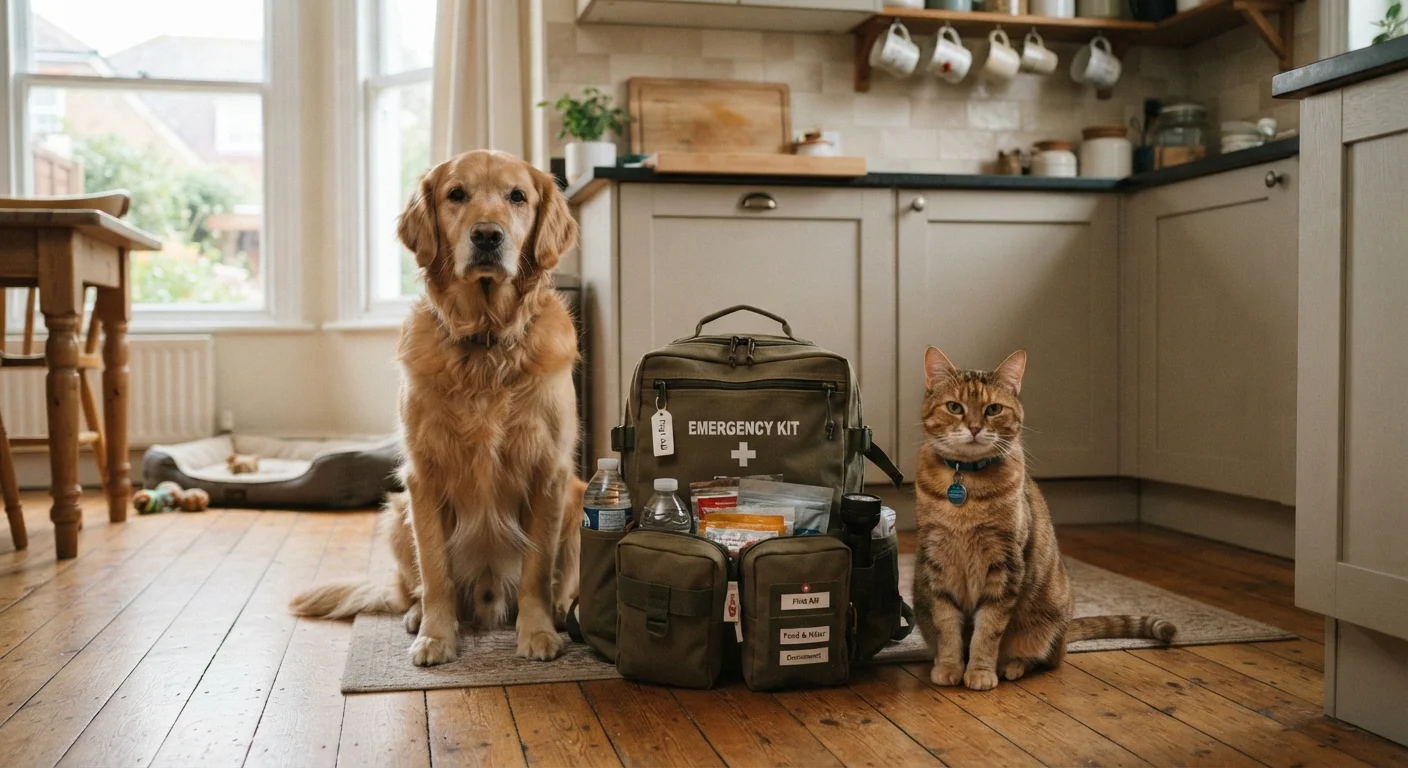
Photo credit: readerspanel.com
In this article
Natural disasters, sudden illness, or power outages: use this checklist to make sure your pet's food, records, and medications are always ready.
Key Takeaways
- A dedicated pet emergency kit should be assembled before a crisis occurs, not during one.
- Copies of vaccination records, prescriptions, and vet contact information belong in the kit.
- Medications and food supplies need regular rotation to stay fresh and usable.
- Your evacuation plan should name pet-friendly shelters and a backup caregiver.
- Stress signals in pets during emergencies can be subtle; knowing them helps you respond early.
Why a pet emergency plan matters
Disasters move quickly, and decisions made in the first few minutes after an alert determine whether your pet stays safe. A hurricane, house fire, extended power outage, or sudden illness can all upend routine care, and the window for thoughtful preparation disappears the moment the emergency starts.
Pets cannot advocate for themselves in chaotic situations. They depend entirely on the plans their owners build in advance. That means a packed kit, documented records, a clear evacuation route, and people who know where to find everything. This checklist covers all four areas so you can audit what you have and fill the gaps methodically.
Stress affects animals differently than it does people. Recognizing the early signs of fear and anxiety in your pet helps you intervene before behavior escalates during displacement. Pairing behavioral awareness with solid preparation gives your pet the best chance of coming through an emergency without lasting harm.
If you are working through seasonal preparedness more broadly, seasonal pet care adjustments covers how to shift your routines as weather and environment change throughout the year.
What to include in your pet emergency kit
A pet emergency kit is most useful when it is self-contained, clearly labeled, and stored where every household member knows to find it. A large, lidded plastic tote works well for most households with one or two pets.
Waterproof document sleeve
Keeps paper records dry and intact inside your emergency kit during flooding or rain.
Airtight food storage container
Preserves kibble or dry food and prevents moisture damage during extended storage.
Collapsible pet bowls
Compact and reusable, making water and food access easy in temporary shelters or vehicles.
Pet first-aid kit
Provides basic wound care and monitoring supplies until you can reach a veterinarian.
Hard-sided carrier or soft crate
Safely contains your pet during transport and provides a familiar space in unfamiliar environments.
USB drive or cloud backup
Stores digital copies of photos, vet records, and prescriptions accessible from any device.
Backup harness and leash
Provides a secondary restraint option for dogs that may pull free of a collar under stress.
One frequently overlooked item is a list of household products and foods your pet must avoid. Knowing what is already in your home or a temporary shelter that poses a hazard can prevent a secondary crisis. Common household items toxic to pets covers the products most likely to appear in unfamiliar environments.
For pet owners who travel regularly, many of the same kit contents translate directly to a travel setup. Traveling with pets outlines how to adapt these supplies for road trips and hotel stays so your preparation does double duty.
The full emergency preparedness checklist
Work through each group below. A "must" item is non-negotiable; a "should" item is strongly recommended; a "nice to have" item adds meaningful comfort or safety but is not critical if time or budget is limited. Aim to complete all "must" items before moving to others.
Documentation and identification
Food, water, and supplies
Medications and health supplies
Containment and transport
Evacuation plan
Leave before you think you need to
Authorities and veterinary emergency teams consistently find that delayed evacuation is the leading cause of pet loss during disasters. If an official evacuation order is issued, take your pet and go immediately. Waiting to see whether conditions worsen puts both you and your animal at greater risk. Roads close, carriers run out of fuel, and conditions change faster than most people anticipate.
Maintaining and reviewing your kit
Building a kit once and never touching it again is nearly as risky as having no kit. Food expires, medications lapse, contact numbers change, and pets outgrow carriers. Schedule a full kit review every six months and pair it with a concrete trigger you already observe, such as changing smoke alarm batteries or rotating seasonal clothing storage.
Never rely on public shelters for pets
Many government-run disaster shelters do not accept animals other than trained service animals. Assuming a public shelter will accommodate your pet could leave you scrambling at the worst moment. Always confirm pet policies with specific facilities in advance and have a private backup plan.
Medications have a shelf life
Storing prescription medications in your emergency kit and forgetting them there is a common mistake. Expired medications may be ineffective or, in some cases, harmful. Set a calendar reminder to check and refresh medications every 90 days, and coordinate refill timing with your veterinarian.
Update your documents after every veterinary visit that changes your pet's health status or medication regimen. A 10-minute file update after an appointment costs almost nothing and keeps your emergency records accurate.
Share this checklist with anyone else in your household or your designated backup caregiver. A kit that only one person knows about is far less useful in a real emergency.
This article is for general informational purposes only. For questions about your pet's specific health conditions, medications, or emergency medical needs, consult a licensed veterinarian.
Author
Pets & Animals Editorial Team
Pets & Animals Editorial Team is the collective byline for our editorial team and contributor network. Articles published under this byline or an editorial pen name are researched, written, and reviewed according to our editorial standards for clarity, consistency, and independence before publication.
View all articles →