
Fear, Anxiety, and Stress in Pets: Recognizing the Signs Across Species
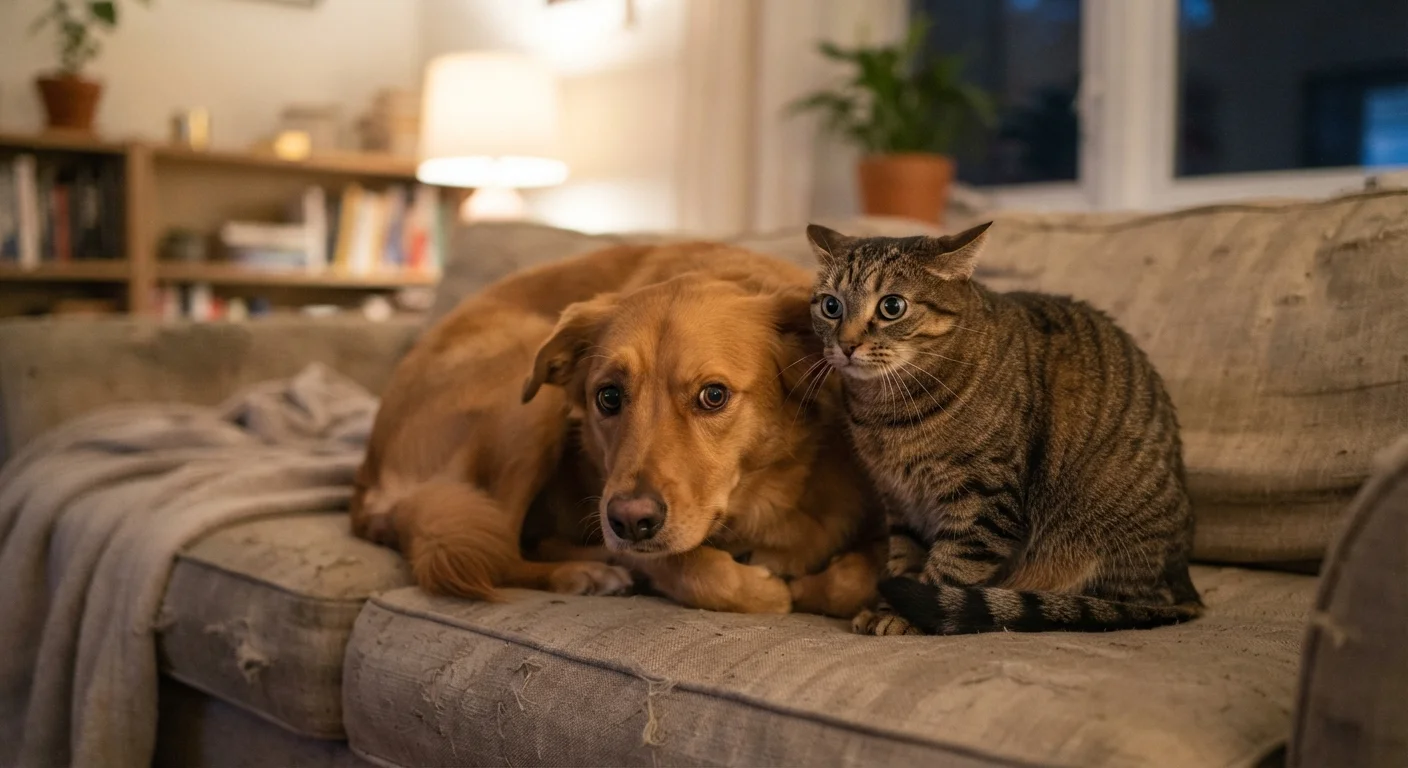
Photo credit: readerspanel.com
In this article
Stressed pets often hide it in subtle ways. This guide covers behavioral and physical signals in dogs, cats, and other common household animals.
Why recognizing fear and stress matters
Pets cannot describe what they feel, so fear, anxiety, and stress (FAS) often go unnoticed until a problem becomes serious. Chronic, unaddressed stress weakens an animal's immune function, disrupts digestion, and can worsen existing health conditions. Recognizing signals early gives owners the chance to intervene before distress compounds.
The signals differ by species and even by individual animal. A dog's distress looks nothing like a rabbit's, and a cat's subtle shutdown can be mistaken for calm. This reference covers the most common and reliable indicators across species that everyday pet owners are likely to share their homes with.
For a deeper look at how body language communicates mood moment to moment, see reading your pet's body language. If stress arises during travel, traveling with pets covers practical ways to reduce environmental triggers on the road.
This article is for general informational purposes only and is not veterinary medical advice. If your pet shows sudden or severe behavioral changes, consult a licensed veterinarian or veterinary behaviorist.
Signs of stress in dogs
Dogs show stress through a spectrum of physical and behavioral cues. Many of these are easy to miss because they look like normal activity.
Fear, anxiety, and stress (FAS)
A spectrum of negative emotional states in animals that range from acute fear responses to ongoing generalized anxiety. Veterinary behaviorists use FAS as a framework to assess and grade emotional distress in clinical settings.
Calming signals
Behaviors animals use to de-escalate tension, both with other animals and with people. Yawning, lip licking, and turning away are common examples in dogs.
Desensitization
A behavior modification technique that gradually exposes an animal to a fear-inducing stimulus at very low intensity, then slowly increases exposure while keeping the animal below its stress threshold.
Sympathetic nervous system
The part of the autonomic nervous system responsible for the fight-or-flight response. When activated by fear or stress, it raises heart rate, dilates pupils, and increases respiration.
Veterinary behaviorist
A veterinarian who has completed specialty training in animal behavior. They diagnose and treat behavioral conditions in animals, including anxiety disorders, and can prescribe medication when needed.
- Yawning outside of tiredness: a single yawn in a calm moment is normal; repeated yawning in a stimulating or unfamiliar situation is a calming signal indicating discomfort.
- Lip licking and nose licking: brief, repetitive tongue flicks not related to food are a stress indicator, especially around strangers or loud noises.
- Whale eye: the white of the eye becomes visible when a dog turns its head while keeping its gaze fixed, a clear sign of tension.
- Tucked tail and lowered body posture: the dog makes itself smaller, ears flat, tail between legs.
- Excessive panting without heat or exercise: stress activates the sympathetic nervous system, producing panting as a physical outlet.
- Destructive behavior or house soiling: when these appear outside a dog's normal pattern, anxiety is a common cause rather than disobedience.
Senior dogs can develop anxiety as cognitive function changes. aging pets at home covers how to adjust a household environment as animals get older.
Signs of stress in cats
Cats are good at concealing distress, which makes their signals easy to overlook. The following are the most consistent indicators across cats of different temperaments.
| Most commonly misread cat stress signal | Hiding (American Association of Feline Practitioners, Feline Behavior Guidelines) |
| Physical system activated by fear | Sympathetic nervous system (fight-or-flight) |
| Appetite loss threshold requiring vet contact (cats) | More than 24 hours (Cats are at risk for hepatic lipidosis with prolonged food refusal) |
| Species with hardest-to-detect stress signals | Rabbits, reptiles, and birds |
| Common physical consequence of chronic stress | Weakened immune function |
| First step before attributing changes to anxiety | Rule out medical causes with a veterinarian |
- Hiding more than usual: a cat that retreats to enclosed spaces and avoids interaction is often overwhelmed, not simply independent.
- Over-grooming or under-grooming: stress can produce either excessive licking that leads to hair loss, or a dull, matted coat from grooming neglect.
- Changes in litter box behavior: going outside the box or straining with little output warrants both a vet visit and a stress assessment.
- Dilated pupils in a calm environment: combined with flattened ears or a low-held tail, this points to fear.
- Chirping, howling, or increased vocalization: uncharacteristic noise, especially at night, can signal anxiety or pain.
- Reduced appetite: cats that stop eating for more than 24 hours need veterinary attention, as prolonged food refusal can cause liver complications.
Signs of stress in small mammals, birds, and other household animals
Rabbits, guinea pigs, hamsters, birds, and reptiles each have their own stress vocabulary. Owners of these species often have fewer reference points, so signals go unrecognized longer.
Rabbits and guinea pigs
- Thumping (rabbits) signals alarm and does not stop until the perceived threat passes.
- Freezing in place, teeth grinding (not the softer tooth-purring), and hunched posture with eyes half-closed all indicate pain or fear.
- Hair loss in guinea pigs can result from barbering by cage mates or self-trauma from chronic stress.
Birds
- Feather destruction, repetitive rocking, or pacing on the perch are behavioral signs of chronic stress in parrots and other psittacines.
- Fluffed feathers in a warm room, combined with lethargy, warrant a vet visit rather than a wait-and-see approach.
- Screaming or biting that increases in frequency, not just volume, typically points to an unmet environmental or social need.
Reptiles
- Loss of appetite over several weeks, darkening of skin color (in species that display color shifts), and refusal to come out of hiding are common stress markers.
- Incorrect temperature or humidity in the enclosure is a frequent cause and should be ruled out before assuming behavioral stress.
For any household pet, keep an emergency preparedness checklist current, including behavioral baseline notes so a vet can compare against normal for your specific animal.
When to contact a veterinarian or behaviorist
Some stress is situational and resolves once the trigger is removed. Persistent or escalating signs do not. The threshold for professional help is lower than most owners expect.
Contact a veterinarian when: physical symptoms appear (hair loss, sores, appetite loss lasting more than 24 hours, elimination changes), behavior is sudden and unexplained, or a previously confident animal becomes withdrawn. A vet can rule out underlying medical causes before attributing changes to anxiety alone.
A veterinary behaviorist or certified applied animal behaviorist addresses cases where the cause is behavioral rather than medical. They can design a behavior modification plan tailored to the specific animal, which may include environmental changes, desensitization protocols, or, in some cases, medication prescribed by the veterinarian.
General pet health and care guidance is a useful starting point, but individualized professional assessment is the appropriate step when stress signs are chronic or severe.

Author
Pets & Animals Editorial Team
Pets & Animals Editorial Team is the collective byline for our editorial team and contributor network. Articles published under this byline or an editorial pen name are researched, written, and reviewed according to our editorial standards for clarity, consistency, and independence before publication.
View all articles →