
Pet-Proofing Your Living Space Without Sacrificing Your Home's Style
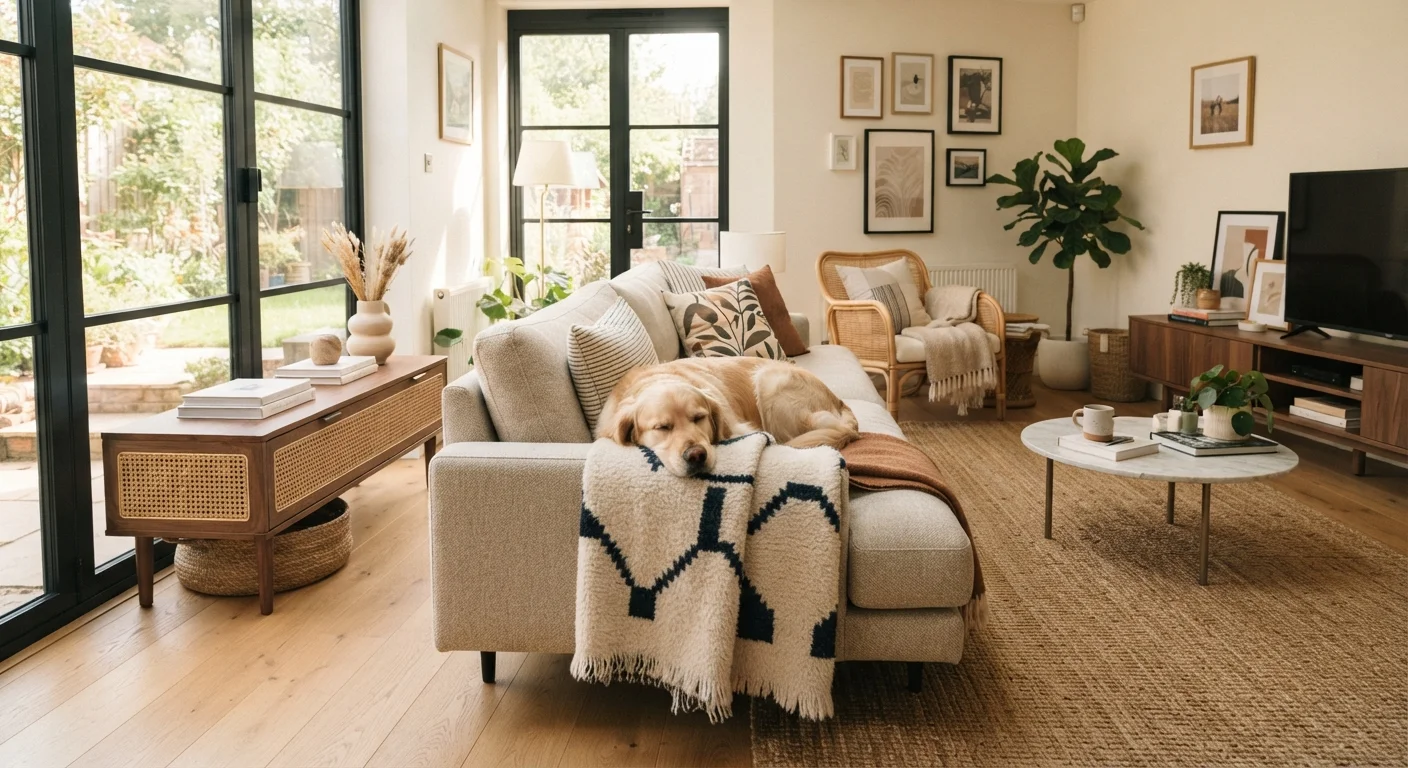
Photo credit: readerspanel.com
In this article
Practical adjustments to furniture, flooring, and storage that protect your pet and your home without making every room look utilitarian.
Key Takeaways
- Durable, easy-clean materials protect surfaces without requiring you to abandon a cohesive design scheme.
- Strategic storage and furniture placement reduce pet hazards and visible clutter at the same time.
- Designated pet spaces improve animal well-being and help keep the rest of your home intact.
- Small flooring and textile upgrades do most of the heavy lifting in a pet-friendly home.
Choosing materials that hold up without looking clinical
The biggest design sacrifice most pet owners make is unnecessary: choosing ugly, purely functional materials because they assume attractive ones won't survive. In practice, several fabric and surface options are both durable and good-looking.
For upholstery, tightly woven fabrics such as canvas, microfiber, and indoor-outdoor performance textiles resist claw snags and wipe clean. Leather and faux leather show scratch marks over time, but they don't trap odor or hair the way loosely woven fabrics do. Avoid bouclé, velvet, and open-weave linen if your pet shares the furniture regularly.
Hard flooring is generally easier to maintain than carpet around pets, but not all hard floors are equal. Engineered hardwood is more moisture-stable than solid wood. Porcelain tile resists scratches well. Luxury vinyl plank has improved enough in texture and finish that it reads as wood or stone while tolerating claws and spills. If you want area rugs, flat-weave styles in darker tones or multicolor patterns hide hair and stains between cleanings.
Paint finishes matter too. A satin or semi-gloss finish on walls near pet feeding areas or entryways wipes clean far more easily than flat paint. This one swap costs almost nothing and pays off every time muddy paws meet a wall.
For a broader look at how decor choices interact with safety, see home decor ideas that balance aesthetics with practical living.
Furniture layout and storage that reduce risk
How furniture is arranged shapes both the look of a room and the hazards inside it. Pets investigate at floor level, so what sits there matters. Electrical cords bundled against baseboards, houseplants on low tables, and loose items on open shelving all create problems.
Cord management channels that mount flush to the wall are nearly invisible and eliminate a common chewing hazard. Moving plants to high shelves or hanging planters removes temptation and reduces exposure to toxic species. The article household items toxic to pets is worth reviewing before deciding where anything lives in your home.
Storage ottomans and built-in benches serve double duty: they store pet supplies out of sight and give you a surface that's easy to wipe. A hook system near the entry keeps leashes, waste bags, and outdoor pet gear accessible but off the floor. When these items have a home, they stop accumulating on counters and chairs.
Furniture with legs works better in pet households than pieces that sit flush to the floor. Sofas and beds raised on legs allow you to clean underneath them, which is where hair and debris collect fastest. It also prevents pets from wedging themselves in spaces that are hard to reach in an emergency.
Building in a pet space that the room can absorb
Giving your pet a defined area does more than contain mess. Animals, especially dogs, benefit from having a consistent retreat that belongs to them. A crate with a fitted cover that matches your textiles reads as furniture rather than equipment. A wall-mounted cat shelf in a neutral finish blends into a gallery wall arrangement. A corner dog bed in a fabric that ties into the room's palette avoids the 'afterthought' look that most pet beds have.
A designated pet space supports animal well-being in ways that go beyond tidiness. When the space is intentional, it also tends to stay contained rather than expanding across every surface in the room.
For homes with older animals, the same thinking applies with some modifications. Ramps, non-slip runners, and lower-profile beds change the function of a space without requiring a design overhaul. See keeping an elderly dog comfortable as mobility declines for specific adjustments worth making as pets age.
Maintenance habits that protect both pet and home
No material choice fully substitutes for a consistent cleaning routine. Pet hair works into upholstery fibers over weeks; nail scratches deepen if not addressed; odors absorb into walls and subfloor if a spot goes untreated. Catching problems early keeps them from becoming permanent.
A washable slipcover on a sofa can go in the laundry every few weeks without any visible difference in the room's appearance. Enzyme-based cleaners neutralize biological odors at the source rather than masking them, which matters if a pet has an accident on hardwood or grout. Keeping nails trimmed is one of the most effective ways to protect flooring and upholstery, and it's easy to overlook when everything still looks fine.
Seasonal shifts bring their own considerations. Shedding increases in spring and fall, muddy paws peak in wet months, and some pets spend more time indoors during heat or cold. Adjusting your routine as the weather changes makes it easier to stay ahead of mess and wear before it accumulates.
This article is for general informational purposes only and does not constitute veterinary or professional design advice. Consult a qualified veterinarian for any health-related concerns about your pet.

Author
Pets & Animals Editorial Team
Pets & Animals Editorial Team is the collective byline for our editorial team and contributor network. Articles published under this byline or an editorial pen name are researched, written, and reviewed according to our editorial standards for clarity, consistency, and independence before publication.
View all articles →