
The Complete Guide to Household Budgeting: From First Draft to Long-Term Habit
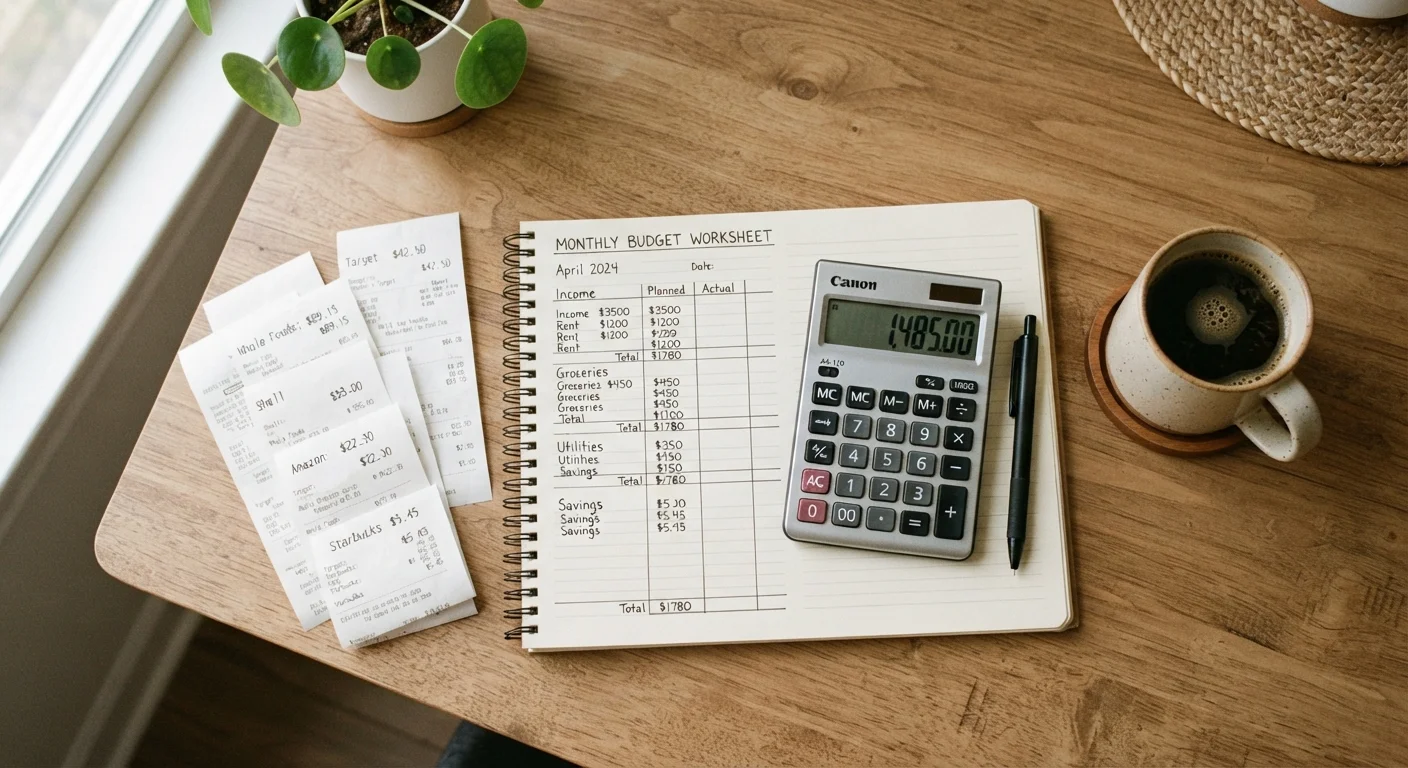
Photo credit: readerspanel.com
In this article
A comprehensive, end-to-end resource covering every stage of household budgeting, from calculating income to adjusting your plan as life changes.
Key Takeaways
- Start with take-home pay, not gross income, to build a budget grounded in real spending power.
- Tracking every spending category for at least one month before setting limits prevents unrealistic targets.
- No single budgeting framework fits every household; pick the structure that matches your habits.
- A monthly review turns a budget from a one-time document into a working financial tool.
- Major life changes require a full budget rebuild, not just minor category adjustments.
What household budgeting actually means
A household budget is a written plan that matches your income to your spending and saving goals over a set period, usually a month. It does not require perfection or a finance background. What it requires is an honest accounting of money coming in and money going out.
Many people treat budgeting as a restriction, but it functions differently in practice. A budget tells you what you can spend freely in each category without guilt, because the math has already been checked. Without one, spending decisions happen in isolation and patterns stay invisible until a crisis forces attention to them.
This guide covers the full process: calculating income, categorizing expenses, selecting a framework, and adjusting the plan as circumstances shift. For a broader introduction to financial stability, see the starter's roadmap to personal saving.
This article provides general financial information for educational purposes only. It is not personalized financial, tax, or legal advice. Consult a qualified financial professional for guidance specific to your situation.
Calculating your real income
The starting number for any budget is take-home pay, meaning the amount deposited into your account after taxes, health insurance premiums, and retirement contributions are deducted. Gross salary is irrelevant here because you cannot spend money you never receive.
List every consistent income source: wages, freelance payments, rental income, alimony, or regular transfers. For variable income, use a conservative estimate based on your three lowest recent months rather than an average. Budgeting against a peak month and then falling short mid-month is a common early mistake.
If you share finances with a partner, combining income streams before building the budget is simpler than managing two parallel plans. The couple's budgeting framework covers how to structure that conversation and the math behind it.
When income varies month to month, build your budget around your floor number, the lowest paycheck you have received in the past six months. Any amount above that floor can be assigned to savings or debt reduction after the month closes.
Budgeting against a conservative income figure prevents shortfalls in fixed expenses and removes the pressure to hit an optimistic earnings target every month.
Open a separate checking account dedicated to irregular annual expenses and fund it monthly with the prorated amount. Treat it as a bill, not optional savings.
Keeping irregular expense money in a general account makes it invisible and easy to spend before the bill arrives. A dedicated account makes the balance visible and earmarked.
Mapping your spending categories
Before setting any spending limits, track actual expenses for a full month. Pull bank statements and credit card records and sort every transaction into categories. Common groupings include housing, utilities, groceries, transportation, healthcare, debt payments, subscriptions, dining, clothing, personal care, and savings.
Two categories deserve special attention. First, irregular expenses such as car registration, annual insurance premiums, and home maintenance tend to blindside budgets because they do not appear monthly. Divide each annual or semi-annual cost by 12 and treat that fraction as a monthly line item. The annual home expense checklist is a useful reference for catching predictable costs before they surface unexpectedly.
Second, discretionary spending is often underestimated. Small daily purchases accumulate faster than most people expect. Accurate tracking, even for one month, consistently reveals categories where spending exceeds what someone believes they spend.
Choosing a budgeting framework
Several structured approaches exist, each suited to different habits and income patterns.
The 50/30/20 approach divides take-home income into three buckets: 50% for needs (housing, utilities, food, transportation, minimum debt payments), 30% for wants, and 20% for savings and extra debt repayment. It works well for households with stable, predictable income and moderate expenses.
Zero-based budgeting assigns every dollar a job so that income minus all allocations equals zero. Every category, including savings, gets a specific amount. This approach demands more time each month but produces very precise awareness of where money goes.
Envelope budgeting, whether done with physical cash or digital equivalents, sets a fixed dollar amount per category. When the envelope is empty, spending in that category stops until the next period. It works particularly well for discretionary categories where overspending is habitual.
If income is tight or unpredictable, the strategies for budgeting on a tight income article covers approaches that prioritize stability over textbook precision.
Building the habit: reviews and adjustments
A budget written once and never revisited stops working within weeks. Monthly reviews transform it into a living tool. Set aside 20 to 30 minutes at the end of each month to compare planned spending against actual spending in every category.
When a category runs over consistently, two responses are valid: reduce spending in that category or reallocate money from a category where you consistently underspend. Both are legitimate. The goal is accuracy, not punishment.
Automation reduces the friction that causes habits to break down. Scheduling automatic transfers to savings on payday means the money moves before discretionary spending has a chance to absorb it. The automation setup walkthrough explains how to connect accounts and schedule transfers without ongoing manual effort.
Grocery and meal planning also support budget consistency in a concrete way. Unplanned grocery trips and last-minute takeout are among the most common sources of budget drift. A weekly meal planning checklist can help reduce both.
When life changes your budget
Income changes, new household members, a move, job loss, or a health event each require a full budget rebuild rather than patching existing numbers. When income drops, address fixed costs first: housing, utilities, and minimum debt payments take priority. Discretionary categories are the first candidates for reduction.
A job change or raise warrants the same rebuild. Additional income absorbed into untracked spending produces no lasting improvement to financial stability. Deciding in advance where new income goes is more effective than hoping the surplus will linger.
For households navigating home ownership, budget planning intersects with maintenance costs in ways renters do not face. The budgeting basics hub covers ongoing strategies for managing those layers, and the DIY home repair hub addresses how to evaluate which repairs you can handle yourself to control costs.
A budget is most useful when it reflects your actual life rather than an idealized version of it. Rebuild it as often as circumstances require.

Author
Smart Shopping Editorial Team
Smart Shopping Editorial Team is the collective byline for our editorial team and contributor network. Articles published under this byline or an editorial pen name are researched, written, and reviewed according to our editorial standards for clarity, consistency, and independence before publication.
View all articles →