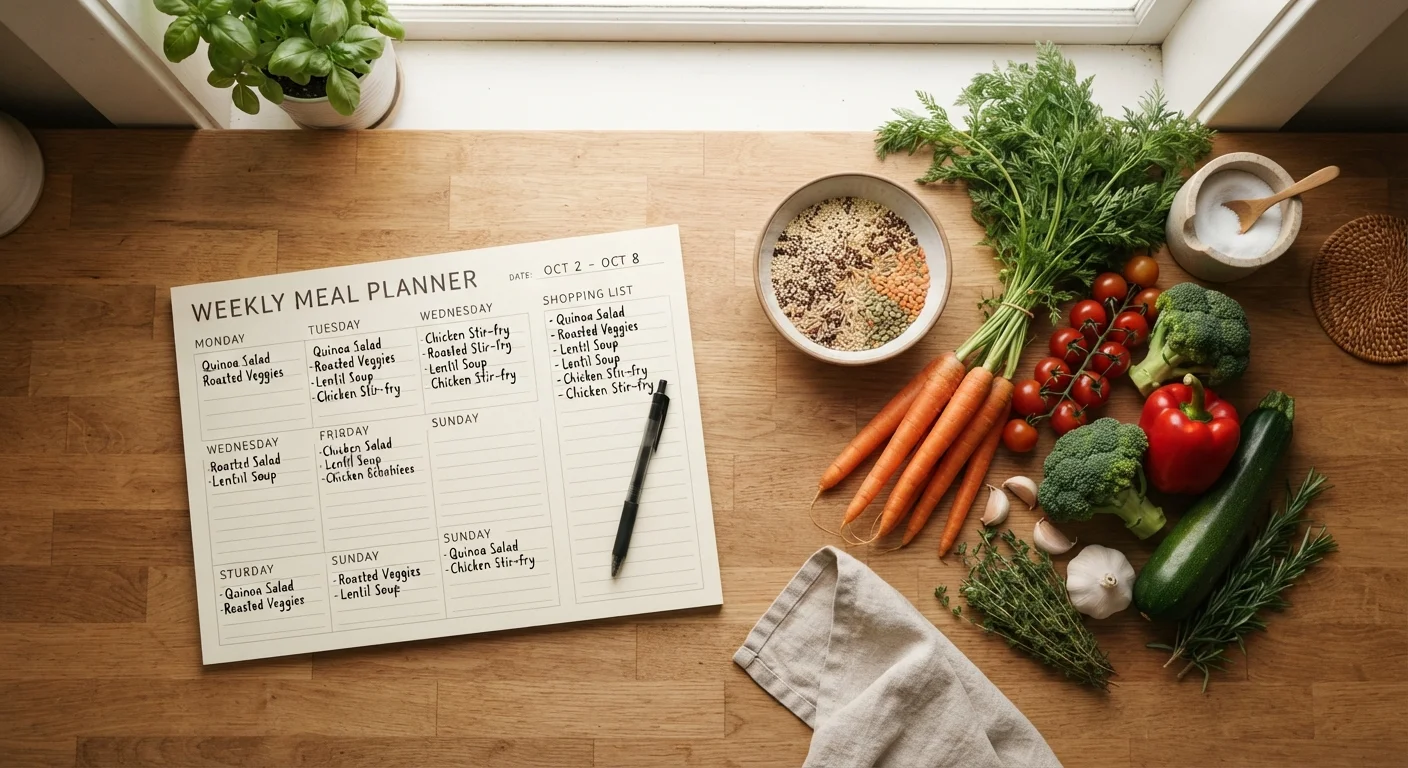
A step-by-step checklist covering inventory, portioning, variety, and prep to make weekday meals far less stressful.
How to use this checklist
Work through this checklist once a week, ideally before your grocery trip. The groups follow a logical order: audit what you have, map out meals, build your list, and prep what you can ahead of time. Most households finish the full process in under 40 minutes once the habit is established.
This checklist covers general nutrition principles and practical organization, not medical or dietary prescriptions. If you manage a health condition that requires a specific eating pattern, consult a registered dietitian for guidance tailored to your situation.
Open the fridge, freezer, and pantry and note what needs to be used before it spoils. Prioritize those ingredients in this week's meals.Must
Check staple supplies: grains, canned goods, oils, condiments, and spices. Restock anything that is nearly empty.Must
Discard expired items and wipe down one shelf while you are looking. A clean, visible pantry makes planning faster next week.Should
Meal mapping
Decide how many dinners you will cook at home this week, being realistic about your schedule on each night.Must
Plan at least one meal that uses a protein and at least one that uses a legume or whole grain as the main component. This builds variety without requiring a complete menu overhaul.Should
Identify one or two breakfasts and lunches that can be prepped in batches, such as overnight oats or grain salads, to cover the busiest weekdays.Should
Keep a short list of household favorites, meals everyone reliably eats, and rotate two or three into each week's plan so planning never starts from zero.Nice to have
Grocery list building
Write your list organized by store section (produce, proteins, dairy, dry goods) to reduce backtracking and impulse additions.Must
Cross-reference the list against what you already have so you do not duplicate pantry items already in stock.Must
Add a small buffer item, such as eggs or canned tomatoes, that can fill in if one planned meal changes.Should
Note quantities precisely rather than writing general reminders like 'vegetables.' Specific items translate directly to faster shopping.Should
Nutrition balance review
Scan the week's plan for color variety in vegetables. Aim for meals that include at least two different vegetable types across the week.Should
Check that your protein sources vary across the week rather than repeating the same one every night.Should
If anyone in the household has a specific health condition or dietary requirement, confirm the plan aligns with professional guidance given to them.Must
Note whether the plan includes enough fiber-rich foods, legumes, whole grains, vegetables, to support digestive health across the week.Nice to have
Prep session planning
Pick one to two hours on a weekend day for batch cooking. Identify which components, cooked grains, roasted vegetables, marinated proteins, will save the most time on weeknights.Must
Portion snacks into grab-and-go containers so healthy options are as easy to reach as packaged alternatives.Should
Write a brief note on a sticky note or whiteboard listing what is prepped and ready in the fridge. This prevents family members from overlooking prepared food.Nice to have
End-of-week review
Note which meals worked well and which were skipped. Use that information to adjust next week's plan rather than repeating the same gaps.Must
Check what food was wasted and identify one change, a smaller quantity purchased or a substitute ingredient, that could reduce that waste next week.Should
Update your household favorites list if a new recipe earned a repeat. A growing list of reliable meals is one of the most useful long-term assets a home cook can build.Nice to have
Putting the plan into practice
A written plan is only useful if your kitchen is set up to support it. After completing the checklist, spend a few minutes on light prep: rinse and dry salad greens, cook a pot of grains, or portion snacks into containers. These small steps remove the friction that causes people to abandon home cooking mid-week.
Do not over-plan and set yourself up to fail
Planning seven elaborate dinners when your schedule realistically allows four leads to food waste and frustration. Start with a number of home-cooked meals that feels easy, not aspirational. A consistent three-night routine is more sustainable than an ambitious seven-night plan that collapses by Wednesday.
If budget is a consistent pressure, eating well on a tight budget covers practical approaches to building nutritious meals without overspending. And if you want to connect food spending to your broader household finances, the complete guide to household budgeting can help you see where groceries fit in the bigger picture.
Variety across the week matters more than perfection on any single day. If one meal does not go as planned, the other meals you prepped still make the week easier. For households curious about expanding protein options, plant-based protein sources covers legumes, grains, nuts, and seeds in practical detail.
This article is for informational purposes only and is not a substitute for advice from a qualified healthcare or nutrition professional.
Author
Health & Wellness Editorial Team
Health & Wellness Editorial Team is the collective byline for our editorial team and contributor network. Articles published under this byline or an editorial pen name are researched, written, and reviewed according to our editorial standards for clarity, consistency, and independence before publication.
All published content on this website is for informational and educational purposes only and should not be taken as professional advice. We recommend that readers seek expert opinion before making any decisions. The website is not responsible for any actions taken based on the information provided on this website. We are not liable for any inaccuracies, modifications, or omissions in information. Moreover, external links or third-party content are provided for convenience; we are not liable for their correctness. Users are advised to verify every piece of information before they use it for any purpose.