
Subscription Creep: How Small Recurring Charges Quietly Drain Your Budget
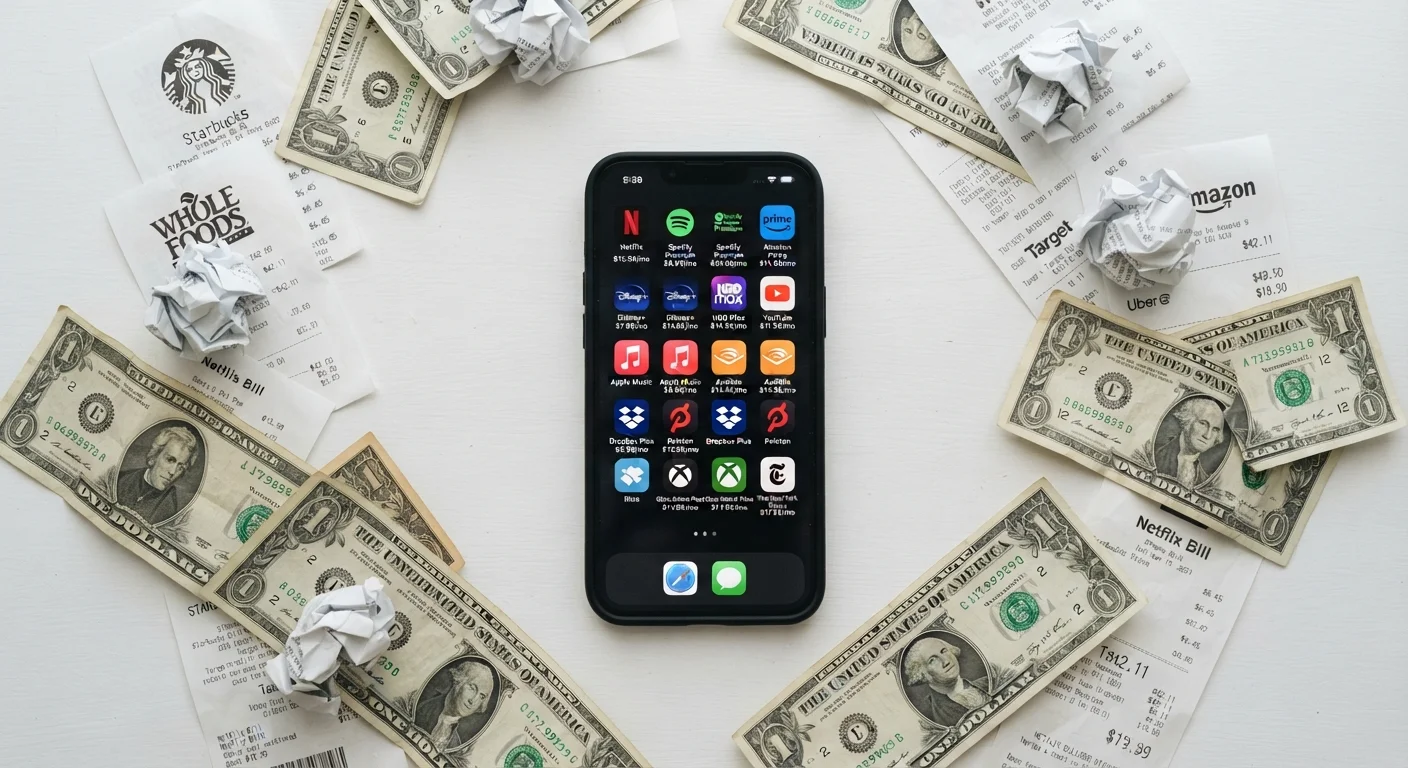
Photo credit: readerspanel.com
In this article
Recurring charges under ten dollars rarely feel significant, but collectively they can represent hundreds of dollars a year. Here is how to spot and manage them.
Key Takeaways
- Recurring charges under $10 can collectively exceed $100 per month without feeling significant day to day.
- Free trials that convert automatically to paid plans are a common entry point for unwanted subscriptions.
- Auditing bank and card statements at least once a quarter is the most reliable way to catch forgotten charges.
- Annual billing cycles make individual services harder to notice because the charge appears only once a year.
- Canceling unused subscriptions is immediate; the savings compound over every month that follows.
Why small charges add up faster than expected
A $4.99 charge barely registers. Neither does $6.99, $8.99, or $12. But when a household carries eight to twelve of these charges simultaneously, the monthly total can easily clear $100. That is more than $1,200 a year spent on services many people could not name without looking them up.
The psychological mechanism behind this is well-documented in behavioral economics: people evaluate costs in isolation rather than as a portfolio. Each subscription passes a mental cost-benefit check on its own. The cumulative check rarely happens at all. This is also why subscription creep overlaps with broader patterns of lifestyle inflation, where small spending increases accumulate invisibly over time.
Automation makes this worse. When a charge processes without any action on your part, there is no decision point to trigger a review. Months or years can pass before the service comes to mind again.
Start with one card statement
If a full audit feels overwhelming, begin with just one credit card statement from the past 30 days. Sort every charge into recurring or one-time. That single pass will show you how many subscriptions you have attached to that card and give you a baseline to work from.
The categories where creep is most common
Streaming video and music services account for a large portion of household subscription spending, but they are also the easiest to audit because most people actively use at least some of them. The charges that cause the most damage tend to be in less visible categories.
- Free trials from app stores that converted to paid plans after 7 or 30 days
- Annual memberships that renew automatically, such as cloud storage or software licenses
- Fitness apps or online workout platforms signed up for in January and forgotten by March
- News or magazine subscriptions started for a single article behind a paywall
- VPN or password manager plans that were bundled with a device purchase
Annual charges are particularly easy to miss. A $99 renewal that posts once a year does not feel like a monthly expense, so it rarely makes it into a household budget as a line item. For a broader look at costs that fall into this pattern, see how irregular expenses disrupt budgets.
$100+
Typical monthly subscription total per household
Consumer surveys consistently find that households carry more active subscriptions than they realize, with monthly totals frequently exceeding $100 once all services are counted.
50%+
Underestimate gap in self-reported spending
Research on subscription awareness has found that people typically underestimate their total subscription costs by more than half when asked before conducting a formal audit.
$1,200
Annual cost of $100/month in subscriptions
A household paying $100 per month across all subscriptions spends $1,200 per year, a figure that rarely appears as a single line in anyone's mental budget.
How to audit what you are actually paying
The only reliable audit method is a direct review of every bank and credit card statement from the past three months. Search for recurring amounts and look for any charge that repeats. Pay attention to amounts that appear on slightly different days each month, which is common with services that bill from the signup date rather than the first of the month.
After listing every charge, sort them into three groups: services you use regularly, services you use occasionally, and services you had forgotten about entirely. The third group can typically be canceled immediately. The second group warrants a cost-per-use calculation. A closer look at how to evaluate recurring charges can help with that decision.
For services in the first group, check whether you are on the right tier. Many streaming and software platforms have multiple price points, and people often sign up at a higher tier than they need. Downgrading is not the same as canceling, but it reduces the monthly total without losing access.
Building this review into a regular habit prevents the list from growing unchecked again. A brief weekly budget check-in takes less time than most people expect and catches new charges before they become forgotten ones.
What to do after the audit
Cancel unused services immediately. Do not defer to a future review. Most cancellations take under five minutes online, and the savings start with the next billing cycle.
For services you want to keep, consider whether the billing frequency is working for you. If a service you use seasonally charges monthly, pausing or canceling between seasons and resubscribing is a legitimate option that many platforms support. If an annual plan has been auto-renewing for a service you only marginally use, switching to monthly gives you a lower commitment, even if the per-month cost is slightly higher.
Going forward, treat every free trial as a calendar event. Set a reminder one or two days before the trial ends so you make an active decision rather than letting it convert by default. This single habit prevents a large share of new subscription creep from taking hold.
Subscription spending also connects to the broader category of predictable costs that go unplanned. Building a complete picture of recurring obligations is the foundation for any budget that actually reflects how money moves through a household.
This article is for general informational purposes only and does not constitute financial advice. For guidance specific to your financial situation, consult a qualified financial professional.
Frequently Asked Questions

Author
Smart Shopping Editorial Team
Smart Shopping Editorial Team is the collective byline for our editorial team and contributor network. Articles published under this byline or an editorial pen name are researched, written, and reviewed according to our editorial standards for clarity, consistency, and independence before publication.
View all articles →