
Highway Driving vs. City Driving: How Your Approach Should Shift
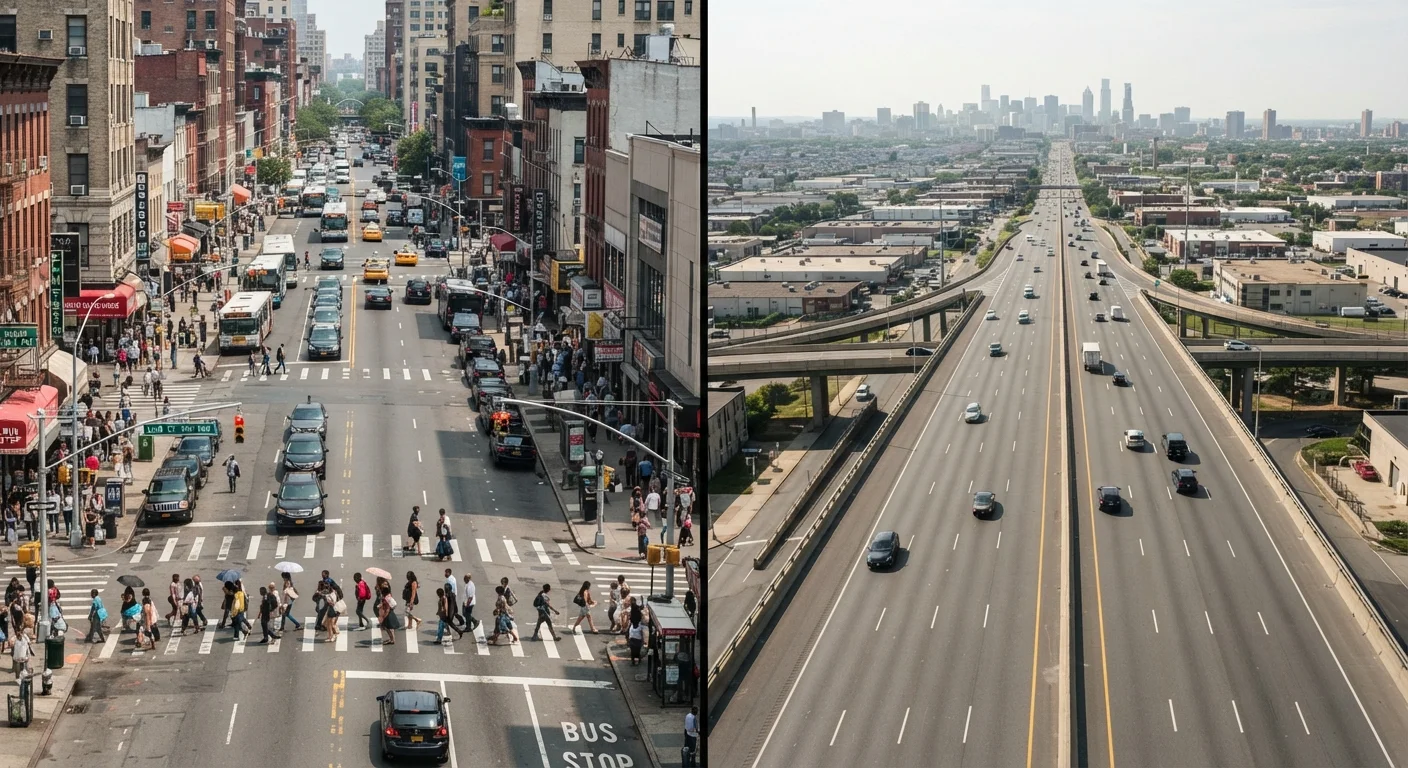
Photo credit: readerspanel.com
In this article
Merging at speed and navigating dense intersections call for different skills. See how experienced drivers mentally switch gears between environments.
Key Takeaways
- Highway driving demands sustained attention and larger following distances because speeds multiply stopping distances dramatically.
- City driving requires constant scanning for pedestrians, cyclists, and turning vehicles at close range.
- Merging and lane changes are among the most crash-prone moments on highways, not high-speed cruising.
- Urban familiarity breeds complacency, making intersections and blind spots more dangerous over time.
- Switching mentally between environments takes deliberate adjustment, not just a change of road type.
- Both settings reward smooth, predictable inputs over reactive, sudden maneuvers.
What actually changes between environments
The physical difference between a highway and a city street is obvious. The mental difference is where most drivers fall short. On a highway, you make fewer decisions per minute but each one carries more weight: a lane change at 70 mph leaves almost no margin for error. In a city, decisions stack rapidly. A cyclist appears in a door zone, a bus pulls out, a pedestrian steps off a curb. Speed is low, but exposure is constant.
Speed determines stopping distance more than most drivers appreciate. At 65 mph, a typical passenger vehicle needs roughly 300 feet to stop from the moment a hazard appears. At 30 mph in a city block, that figure drops to under 100 feet, but the hazards are far closer to begin with. Both environments are dangerous; the nature of the danger simply differs.
Urban driving hazards become harder to catch once a route feels routine, because the brain starts filtering out familiar stimuli. Highway driving has its own version: highway hypnosis, where monotony reduces attentiveness during long, featureless stretches.
| Criterion | Highway Driving | City Driving |
|---|---|---|
| Typical speed range | 55 to 75 mph | 15 to 45 mph |
| Decisions per minute | Few, high-stakes | Many, rapid-fire |
| Primary hazard type | Lane changes, merging gaps, fatigue | Intersections, pedestrians, cyclists |
| Recommended following distance | 3 or more seconds | 2 seconds minimum |
| Scanning pattern | Long forward gaze, mirror checks | Wide sweep, full intersection |
| Weather impact severity | High: stopping distances double | Moderate: traction and visibility |
| Fatigue risk | Higher on long, monotonous stretches | Lower due to constant engagement |
Highway driving: where the risks concentrate
Contrary to what many drivers assume, high-speed cruising is not where most highway crashes happen. Lane changes and merging account for a disproportionate share of freeway incidents, because drivers misjudge gaps, skip blind spot checks, or signal too late. The mechanics of a good merge, matching speed before entering the travel lane and checking mirrors plus the blind spot, become habitual only with deliberate practice.
Following distance is the other high-leverage variable. The two-second rule is a minimum under ideal conditions; at highway speeds, adding a third second gives meaningful buffer against sudden stops ahead. Heavy vehicles, like trucks, need even more space because their brake performance differs from passenger cars.
Weather compounds both issues fast. Driving in heavy rain reduces tire grip and visibility simultaneously, which means the margins that feel comfortable at 70 mph in dry conditions are not safe in a downpour.
City driving: managing volume and variety
City driving is not inherently safer because speeds are lower. The Federal Highway Administration has consistently found that urban areas account for more total traffic fatalities than rural roads, partly because the density of interactions is so much higher. Intersections are the focal point. Right-of-way confusion at four-way stops, roundabouts, and uncontrolled crossings causes thousands of collisions each year.
Scanning technique changes in a city. Instead of a long forward gaze down a lane, the effective scan covers the full intersection ahead, both sidewalks, parked vehicles that might open doors, and mirrors for cyclists or motorcycles. The scan cycle runs faster because the threat environment changes every few seconds.
Pedestrians and cyclists do not always behave predictably, and a driver's job is to account for that variability rather than rely on others following rules. Slow approach speeds at crossings provide the time needed to respond when someone steps out unexpectedly. Experienced urban drivers often underestimate this because familiarity makes the environment feel controlled.
This article provides general driving information and education. It is not a substitute for formal driver training or the guidance of a qualified driving instructor.
The transition: switching contexts deliberately
The on-ramp and the downtown exit ramp are more than physical transitions. They are the moments when driving context changes and cognitive settings need to reset with it. A driver coming off a two-hour interstate run onto city streets is still calibrated for highway inputs: longer gaps feel normal, slower speed feels restless, and the scanning pattern is wrong for the environment. That mismatch is a real risk.
A practical reset takes about 30 seconds of conscious attention. On entering city traffic from a highway, reduce speed before the first intersection, not during it. Widen the visual scan deliberately. On entering a highway from city traffic, check that speed genuinely matches the flow before committing to the travel lane, rather than easing in below traffic speed and assuming others will adjust.
New drivers are particularly vulnerable at these transitions because they have not yet built the environmental pattern recognition that lets experienced drivers shift modes quickly. Supervised practice across both environments, not just on one road type, closes that gap faster than time alone.
Aggressive driving patterns also behave differently by environment. On highways, tailgating and rapid weaving between lanes are the visible forms. In cities, the equivalent is running late-yellow lights and forcing turns through pedestrian flows. Both are reactive rather than deliberate, and both increase collision risk in proportion to how common they become in a driver's habits.

Author
Automotive Life Editorial Team
Automotive Life Editorial Team is the collective byline for our editorial team and contributor network. Articles published under this byline or an editorial pen name are researched, written, and reviewed according to our editorial standards for clarity, consistency, and independence before publication.
View all articles →