
Free-Roam vs. Contained Living for Small Pets: What Each Looks Like in Practice
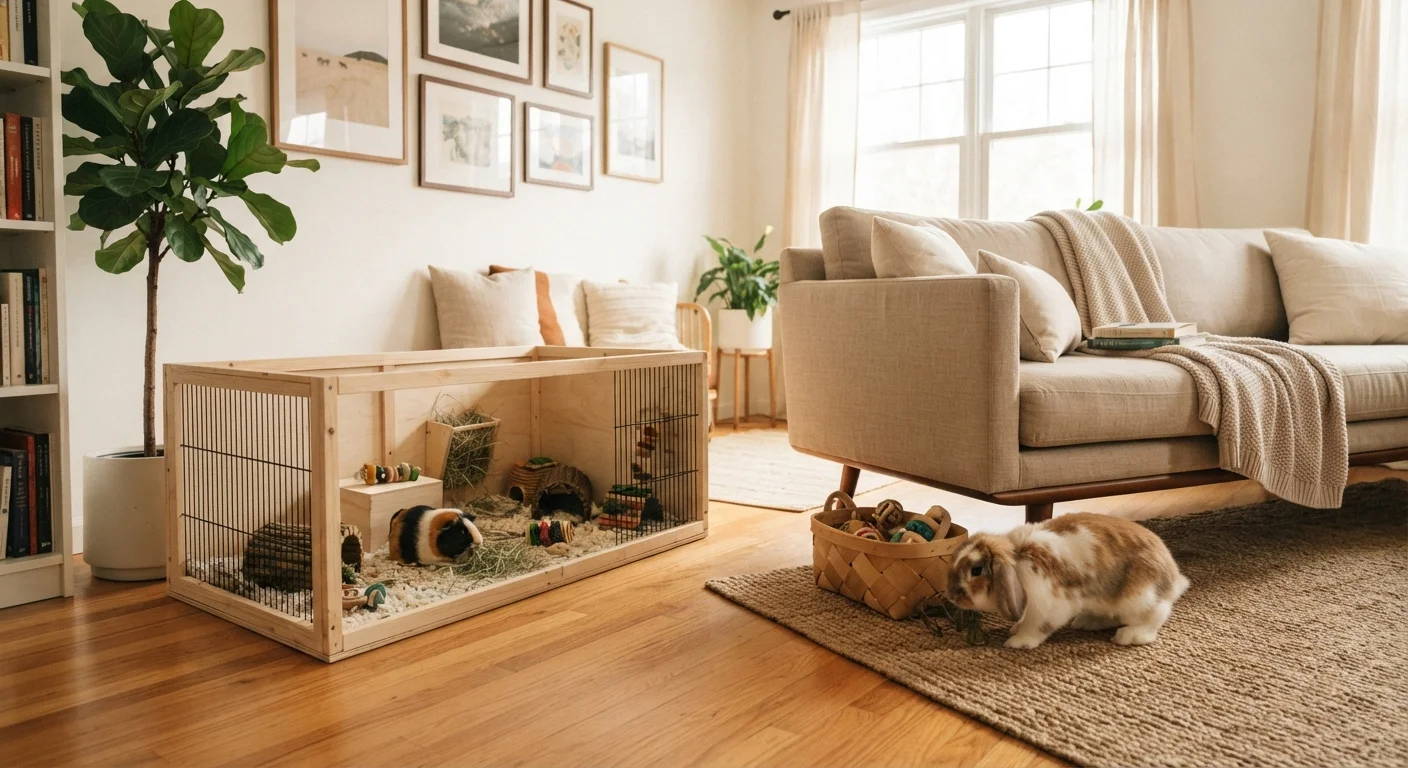
Photo credit: readerspanel.com
In this article
For rabbits, guinea pigs, and similar animals, the choice between open roaming and enclosures involves real trade-offs worth understanding.
What free-roaming actually involves
Free-roaming means the animal has access to part or all of the home without returning to an enclosure between interactions. For rabbits, this is increasingly common and aligns with guidance from rabbit welfare organizations, which generally hold that rabbits need substantial space to run, binky (jump and twist), and explore. Guinea pigs are less often given full free-roam access, but some owners do manage it successfully in contained rooms.
The practical demands are significant. Electrical cords, toxic houseplants, low furniture gaps, and flooring that offers poor traction all become real hazards. Pet-proofing your living space involves more than tucking away wires; it means thinking about what a small, curious animal will chew, squeeze behind, or fall from. Baseboards, chair legs, and remote controls are common casualties.
Free-roaming animals also need a consistent litter or bathroom area, and training for this takes time. Rabbits can be litter-trained reliably; guinea pigs are less predictable. Without a designated space to retreat to, some animals become anxious rather than liberated, so watching the individual animal's behavior matters as much as the general setup.
What contained living actually involves
Contained living means the animal lives primarily in an enclosure, pen, or dedicated room, with supervised time outside it. The most common version is a large cage or C&C grid pen (modular wire panels) that gives the animal room to move, separate sleeping and bathroom zones, and enrichment items like tunnels and hides.
Size matters considerably here. Small pet welfare guidelines generally specify minimum floor space well above what pet-store cages offer. A guinea pig pair, for example, typically needs at least 7.5 square feet of floor space according to many cavy care resources, and larger is consistently better. An undersized enclosure with no roam time outside it causes boredom and stress-related behaviors such as bar-chewing or repetitive pacing.
Establishing a safe roam zone first
Before giving a small pet unsupervised roam access, spend time in the space at the animal's level. Look for gaps behind appliances, exposed cords, and anything chewable at floor height. Blocking one room at a time and expanding access gradually is easier to manage than pet-proofing an entire floor at once.
Contained setups work best when they include a designated pet zone that the animal can reliably return to. A consistent retreat supports lower stress levels and makes it easier to monitor eating and bathroom habits, which are early indicators of health changes.
Health and behavior differences to expect
Small animals with more space and varied terrain generally show more natural behaviors: foraging, exploring, and social interaction (for social species like guinea pigs, which should not be kept alone). Restricted movement over long periods can contribute to obesity and muscle weakness, particularly in rabbits.
Contained animals are easier to monitor. Owners notice changes in food intake, droppings, or activity level more quickly when the animal's world is bounded. This matters because small prey animals often mask illness, and early detection depends on knowing what normal looks like for that individual. Pet health and care resources can help owners build baseline knowledge for their specific species.
As small pets age, contained setups with low entry points, soft bedding, and minimal obstacles are often easier to adapt than a free-roam arrangement where the animal has learned to jump furniture or navigate stairs.
| Criterion | Free-roam | Contained | Hybrid | |
|---|---|---|---|---|
| Space for movement | High, whole room or home | Limited to enclosure size | Moderate, enclosure plus roam zone | |
| Setup effort | High, full pet-proofing required | Moderate, enclosure sizing and furnishing | Moderate, both areas needed | |
| Ease of health monitoring | Harder, animal moves freely | Easier, habits are observable | Moderate, monitor in enclosure | |
| Safety in multi-pet homes | Lower, harder to separate | Higher, clear boundaries | Higher, controlled access | |
| Behavioral enrichment | High when well managed | Depends on enclosure size | Good with regular roam sessions | |
| Owner time commitment | High, ongoing supervision | Lower daily, cleaning focused | Moderate, scheduled sessions |
Making the hybrid model work
Many owners settle on a hybrid: a spacious enclosure as a home base, with one or more daily roam sessions in a pet-proofed area. This gives the animal movement and novelty while keeping the owner's management load predictable.
Consistency matters more than duration. Animals adapt to routines, and a rabbit or guinea pig that expects a morning roam session will be calmer during contained hours than one whose schedule is unpredictable. The roam area should be the same space each time, at least initially, so the animal builds familiarity rather than stress from novelty.
If you are bringing a second pet home, the hybrid model also makes introductions easier to control. Each animal can have defined spaces before shared time is introduced gradually.
This article is for general informational purposes only and is not a substitute for veterinary advice. Consult a qualified veterinarian for guidance specific to your pet's species, age, and health status.

Author
Pets & Animals Editorial Team
Pets & Animals Editorial Team is the collective byline for our editorial team and contributor network. Articles published under this byline or an editorial pen name are researched, written, and reviewed according to our editorial standards for clarity, consistency, and independence before publication.
View all articles →