
What Slow Travel Actually Means and Why Americans Are Embracing It
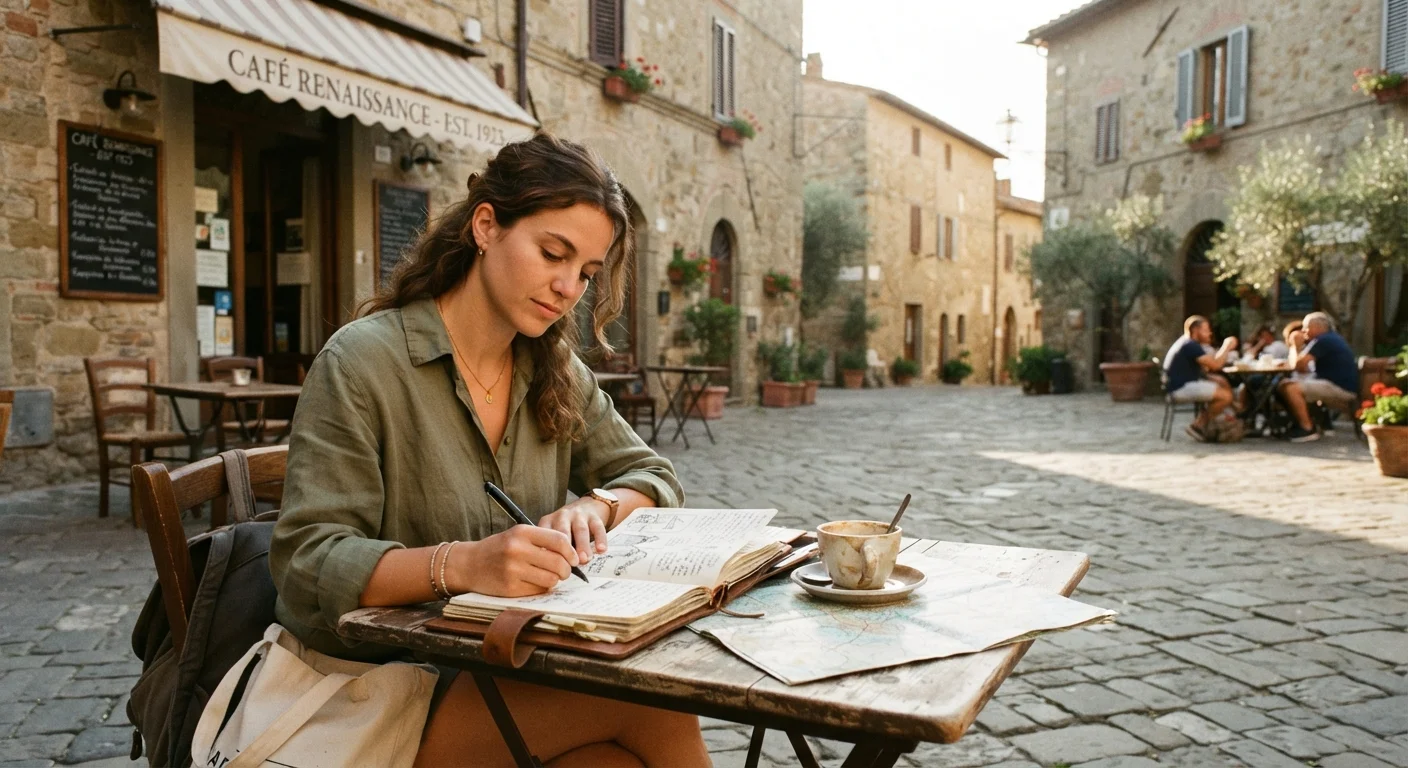
Photo credit: readerspanel.com
In this article
Slow travel is more than a pace change. Understand the philosophy, its practical trade-offs, and whether it suits the way you like to explore.
Key Takeaways
- Slow travel means spending more time in fewer places, not simply moving at a relaxed pace.
- It typically costs less per day than fast-paced touring because travelers pay local rates and cook more meals.
- Americans are drawn to it partly as a response to short vacation windows and the exhaustion of checklist travel.
- Slow travel has real trade-offs, including fewer destinations per trip and the need for more upfront planning.
- It suits some travel personalities and trip types much better than others.
The idea behind slow travel
Slow travel is not a product, a visa category, or a booking type. It is a way of deciding what a trip is for. The core premise is straightforward: stay in one place long enough that you stop being a tourist and start being a temporary resident. You shop at the same market twice. You learn which cafe is actually good. You notice the rhythm of a neighborhood rather than photographing its surface.
That shift has practical consequences. A slow traveler in Lisbon for three weeks will likely spend time in residential districts that tour buses never reach, eat where locals eat because they have had time to find those spots, and develop at least a passing familiarity with transit, weather patterns, and the social tempo of the city. Someone spending two days there will almost certainly see more famous landmarks but know less about the place. Neither approach is wrong. They answer different questions about what travel is for.
The contrast with conventional itinerary travel is worth spelling out. A common American vacation template involves flying to a country, spending one to two nights in four or five cities, and returning home with a long photo album and a kind of pleasant exhaustion. That model is optimized for coverage. Slow travel is optimized for familiarity, and those two goals are genuinely in tension. See our guide to flexible versus fully booked trips for a deeper look at how planning style shapes the experience.
Why American travelers are paying attention
Americans average far fewer paid vacation days than workers in most wealthy countries, and many do not use the days they have. That structural reality has historically pushed travelers toward efficient, coverage-heavy trips: if you only have 10 days and you are flying to Europe, the instinct is to see as much as possible.
Something has been shifting. A meaningful number of travelers, particularly those with remote-work arrangements or more schedule flexibility, have started questioning whether the checklist model leaves them feeling genuinely rested or connected to the places they visited. The answer, for many, has been no.
28%
U.S. workers who used all their paid vacation days
According to a 2023 Pew Research Center survey, roughly 28% of American workers used all of their paid time off in the previous year, with many citing work pressure as the reason for leaving days unused.
35%
Remote-capable jobs held by Americans in 2023
The Bureau of Labor Statistics reported that approximately 35% of employed Americans worked in jobs that could be performed remotely, expanding the feasibility of longer stays abroad for a meaningful segment of the workforce.
Remote work accelerated this. When your job can follow you, a month in one location becomes logistically possible in a way it was not before. Slow travel does not require remote work, but the overlap between the two communities is significant. Portugal, Mexico City, and various Southeast Asian cities have all seen increases in longer-stay visitors who are partly working and partly exploring. Portugal's particular appeal for longer stays connects directly to this pattern.
There is also a reaction to overtourism. Travelers who have waited in a 90-minute line for a famous viewpoint and come away vaguely disappointed are more open to the idea that famous landmarks are not the only measure of a good trip. Strategies for experiencing crowded destinations differently share some of the same logic as slow travel: get off the main circuit and find something more real.
What slow travel looks like in practice
The specifics vary enormously, but a few patterns appear consistently. Slow travelers tend to rent apartments or rooms rather than booking hotels, because a kitchen and a laundry machine change daily life considerably. They often pick a single city or a small region rather than country-hopping. They build some structure around the stay: a language class, a regular market visit, a weekly hiking route, a cooking lesson.
Slow travel is not passive. It requires more independent research because you are not following a tour company's itinerary. You need to find your own neighborhood, figure out transit, and decide what to do with a Tuesday afternoon when there is no scheduled excursion. That independence is part of the appeal for many people and part of the friction for others.
It also changes what counts as a successful day. In checklist travel, a good day involves multiple sights. In slow travel, a good day might involve a long conversation with a shopkeeper, finding a bookstore you want to return to, or figuring out which bus gets you to the quieter beach. The metrics shift.
For travelers considering whether slow travel suits them, it helps to think about what you find genuinely satisfying on a trip, not what sounds good in theory. The trade-offs between city-focused and nature-focused travel apply within slow travel too: some people do slow travel in a dense city, others rent a house in a rural region and barely see a tourist attraction the entire time.
The real trade-offs
Slow travel has genuine costs that its advocates sometimes understate. You will see fewer destinations per trip. If you have wanted to visit Japan, Italy, and Greece, a slow travel approach probably means choosing one and going deep rather than all three in two weeks. That is a real loss for some travelers.
Longer stays also require more logistical planning upfront. A monthly apartment rental in a foreign city involves reading contracts, understanding cancellation policies, and sometimes navigating a language barrier in a context where the stakes are higher than ordering food. Finding good long-stay accommodation in popular destinations can be harder and more expensive than short-stay options during peak periods.
Solo travelers thinking about extended stays abroad can find useful grounding in common misconceptions about solo travel: many of the assumed risks do not hold up under scrutiny, but preparation still matters.
The travel format question is also worth considering honestly. Slow travel favors certain transportation modes over others. If your destination requires flying to a hub and then making multiple ground connections, the logistics of a long stay look different than if you are doing a road trip through a single region. Comparing road trips with fly-and-explore formats gets into the specifics of that decision.
None of these trade-offs disqualify slow travel. They just mean it is not a universal upgrade over other approaches. It is a different set of priorities, and whether it fits depends on what you actually want from the time you have.
Frequently Asked Questions

Author
Travel & Adventure Editorial Team
Travel & Adventure Editorial Team is the collective byline for our editorial team and contributor network. Articles published under this byline or an editorial pen name are researched, written, and reviewed according to our editorial standards for clarity, consistency, and independence before publication.
View all articles →